Ask anyone in a Punjab village and they know what wanda is. Ask what it actually contains, or how much an animal should get, and the answers turn into guesses. This guide answers those questions directly.
What is wanda?
Wanda is the grain-based feed given to an animal on top of its fodder. Fodder, such as berseem, maize, sorghum, silage or straw, fills the animal and keeps the rumen working. But the energy and protein needed for high milk, good growth or weight gain cannot come from fodder alone. Wanda fills that gap.
One thing to remember: wanda does not replace fodder. It works alongside it. An animal fed wanda without enough fodder gets an upset rumen, and milk fat drops.
What goes into wanda?
A good wanda is built from a few groups of farm ingredients, and each group has its own job:
- Protein: canola meal, soybean meal and mustard cake. Protein is what milk and meat are built from.
- Energy: maize, barley, sorghum, wheat and rice grain, with molasses. Energy is what turns into milk and weight.
- Fibre: wheat bran, soybean hulls and rice polish, which keep the rumen working. Rice polish adds energy as well.
- Minerals and vitamins: dairy premix, and DCP for calcium and phosphorus.
- Rumen care: yeast, which helps keep the rumen working well, and a toxin binder that guards against mould toxins in grain.
- Bypass fat: extra energy for high-yielding animals, used in higher-grade dairy feeds. In the Fouji range it is in Dairy Gold 22.
These ingredients shift a little with the season and with what is available, which is why no honest mill publishes its full formula or the share of each ingredient. What a mill should tell you is what never goes in. In Fouji Wanda we do not use rice husk, sawdust, industrial waste, poultry litter, meat and bone meal, slaughterhouse waste or hormones.
Mash or pellet: what is the difference?
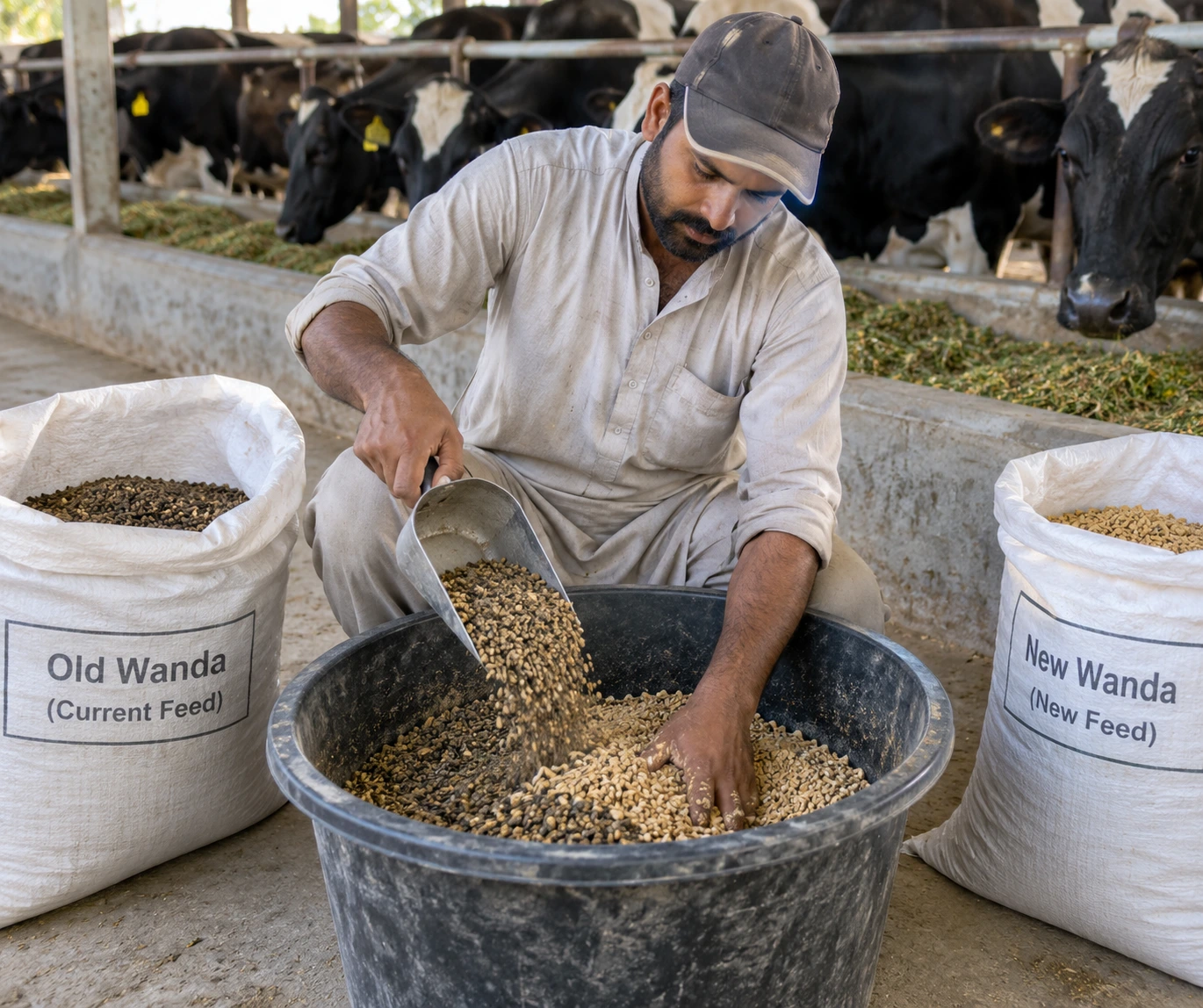
Mamni or mash wanda is the traditional loose wanda that Pakistan has used for generations. The ingredients are ground and mixed. Most animals are used to it and eat it readily.
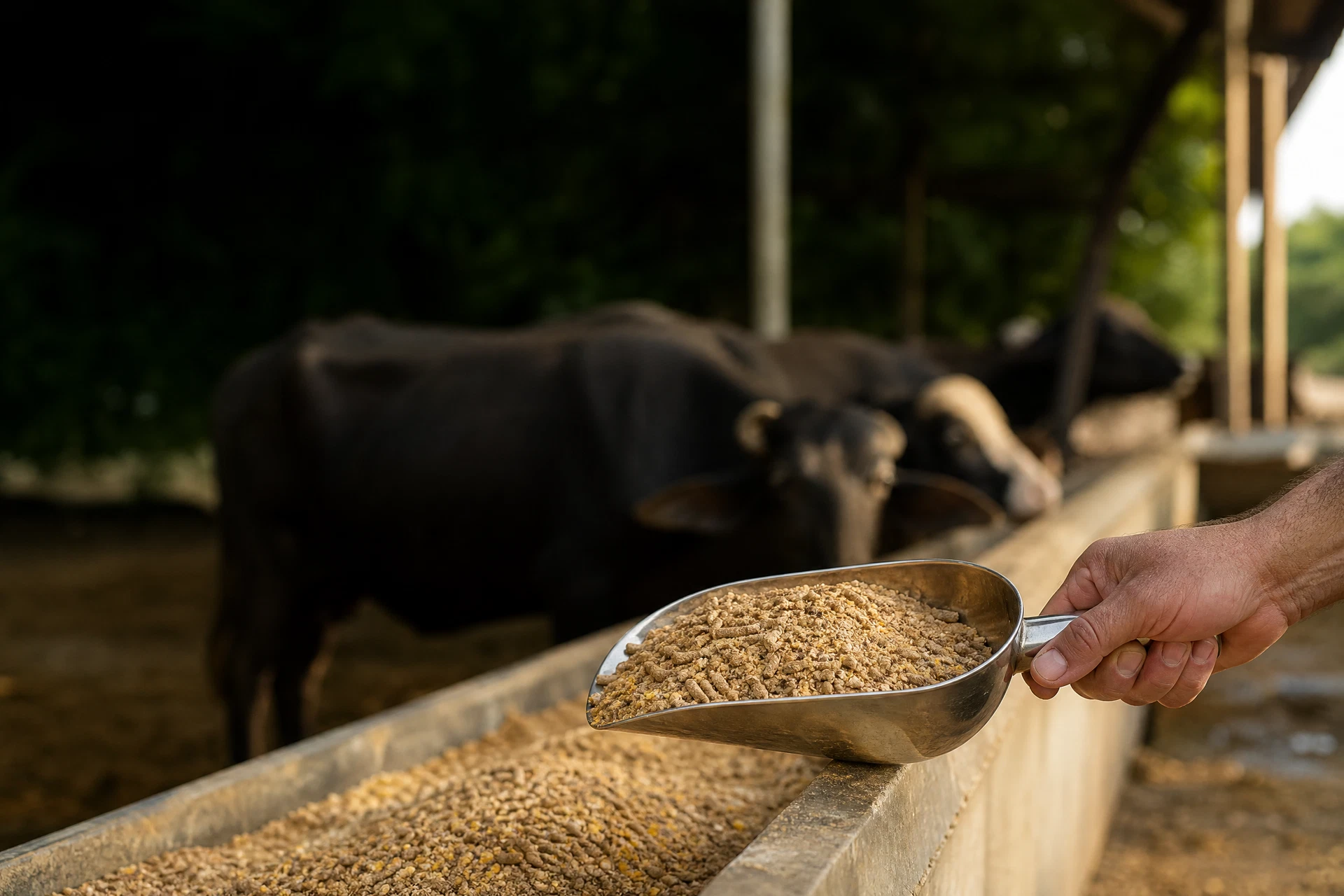
Pellet is the same kind of ingredients pressed into small pellets. Every pellet carries the same nutrition, the animal cannot pick out the parts it likes, and less is wasted between the bag and the manger.
Neither form is automatically better. Feed the form your animal eats well. If you move from one to the other, mix the new form in slowly over seven to ten days.
How much wanda should I give?
Think of a milking animal's wanda in two parts:
- The body's own share: about 1 to 1.5 kg a day, just to keep the animal healthy. Less when there is plenty of good green fodder.
- The milk share: 1 kg for every 2.5 to 3 litres of cow milk, or for every 2 to 2.5 litres of buffalo milk.
Split the day's wanda into two or three feeds, not one. For your own animal's amount, use our feed calculator. It works from the animal, its milk and its fodder.
Which wanda is for which animal?
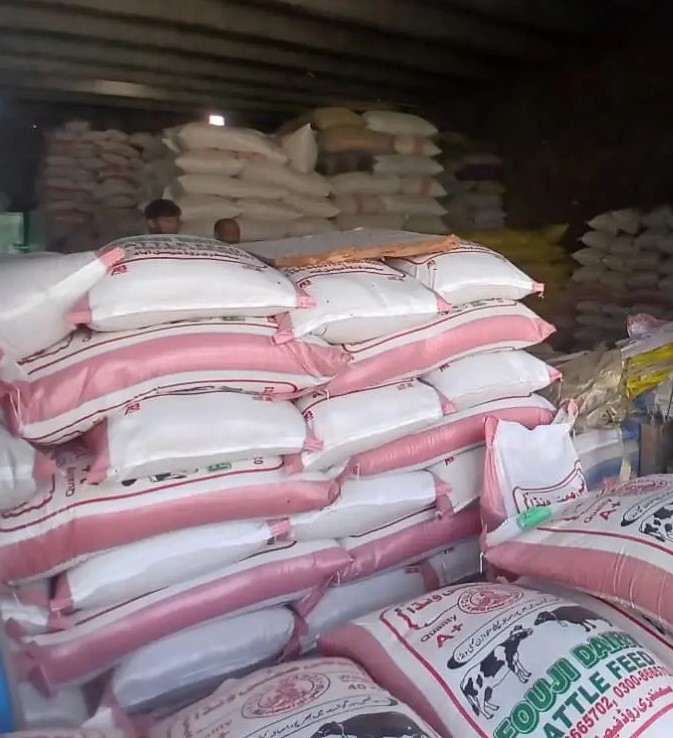
Every animal needs something different, so wanda is made differently too. This is the Fouji Cattle Feed range:
For milking cows and buffaloes
- Fouji Dairy Gold 22: 20 to 22 percent protein, pellet, with bypass fat. For animals giving more than 14 litres a day.
- Fouji Dairy Gold 18 Pellet: 18 percent protein, pellet. For animals giving up to 14 litres a day.
- Fouji Special Wanda: 17 to 19 percent protein, mash. Rich in minerals, vitamins and calcium, for high-yielding cows and buffaloes.
- Fouji Karachi Wanda: 16 to 18 percent protein, mash. Made especially for milking buffaloes; cows eat it too.
- Fouji A+ Wanda: 15 to 17 percent protein, mash. For average-yielding cows and buffaloes, and for late lactation and the dry period. Every kind of animal eats it readily.
For calves, bulls and goats
- Fouji Calf Starter: 20 to 22 percent protein, pellet. For young calves, from the first week, alongside milk.
- Fouji Meat Max: 17 to 18 percent protein, pellet and mash. For fattening bulls, fed by live weight.
- Fouji Goat Max: 18 to 20 percent protein, pellet and mash. For goats and sheep.
Higher protein does not mean a better wanda. Giving a top-grade wanda to a low-yielding animal raises the cost, not the milk. Choose by the animal's milk and its job. For the detail, read Which is the best wanda for milk?
Four things to check before you choose
- Which animal is it, and how much milk is it giving or what stage is it at?
- What fodder is it getting, and how much? Does it have clean water all the time?
- Does the bag clearly state the protein, the animal it is for and the weight? Be careful with a bag that will not tell you its protein.
- Has anything in the diet changed recently?
If you change wanda
Never change wanda in one day. Mix the new wanda in slowly over seven to ten days, and give it two to three weeks before you judge it. The day-by-day method is in our guide on switching to a new wanda.
When to ask a vet
If the animal suddenly eats less, the milk drops suddenly, the animal is sick or pregnant, or you are changing the whole diet, speak to a veterinarian or an animal nutrition expert. This article is general guidance, not a substitute for someone seeing your farm.
Ask us
Tell us the animal, how much milk it gives and what fodder it gets. We will tell you which Fouji Wanda suits it, and today's rate too. Contact us or use Ask Fouji.