Most complaints about a new feed are really complaints about how fast it was introduced.
Never change wanda in one day
A cow or buffalo does not digest feed by itself. The microbes in its rumen do that work, and those microbes are adapted to whatever the animal has been eating for weeks. Change the feed in one day and you have changed their world overnight: intake drops, dung goes loose, and in the worst case the rumen turns acidic.
None of that is the new feed being wrong. It is the change being too fast.
The seven to ten day method
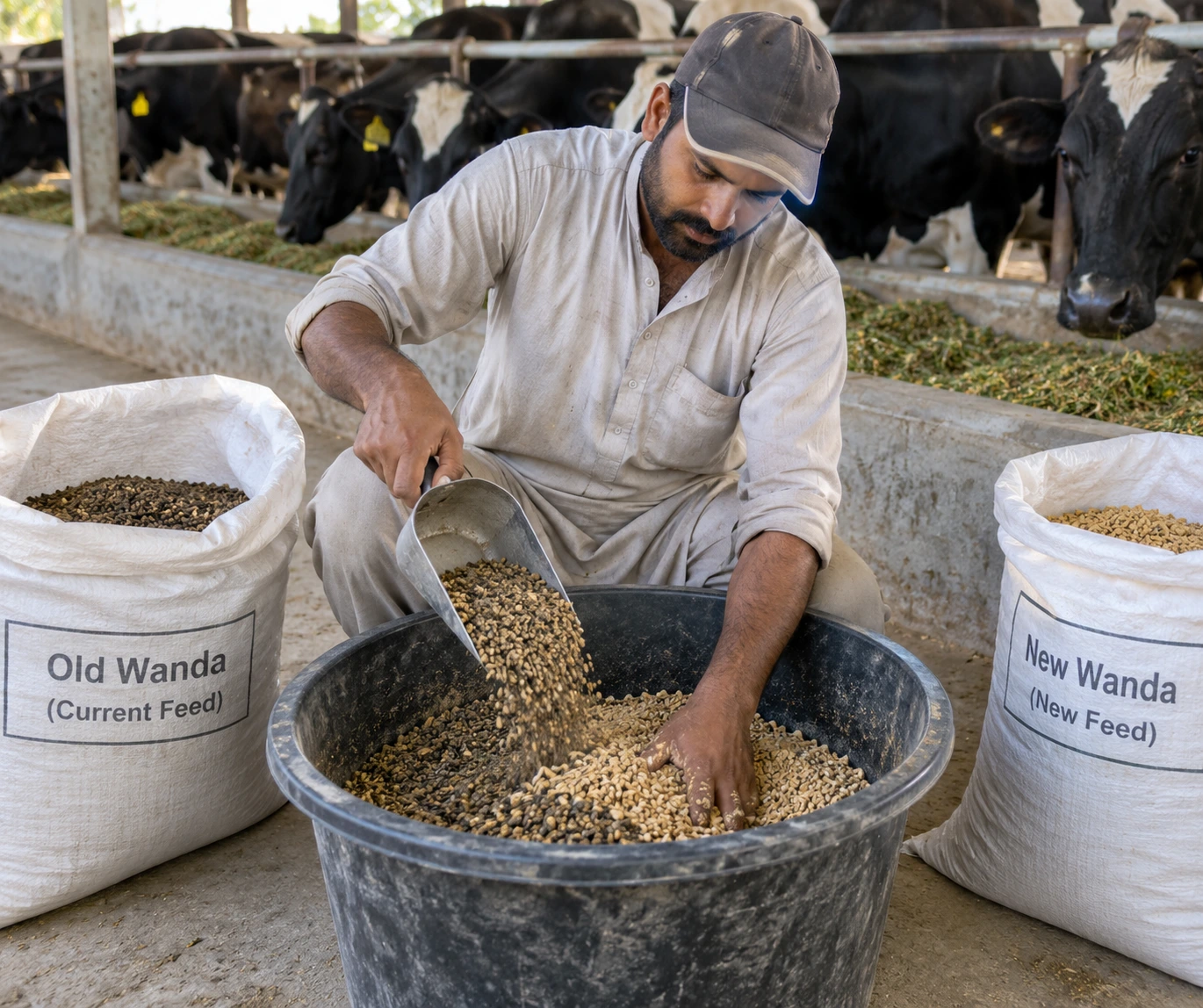
Mix the new wanda into the old one and move the ratio a step at a time:
- Days 1–3: 25% new wanda, 75% old
- Days 4–6: 50% new, 50% old
- Days 7–9: 75% new, 25% old
- Day 10 onwards: 100% new wanda
If the animal is eating less at any step, stay on that step for an extra day or two instead of moving up. There is no prize for finishing early.
You can browse our full feed range if you are deciding which wanda to move an animal onto.
Keep everything else the same during the change
Change one thing at a time, or you will not know what caused what. During the transition, do not also change the forage, the milking times, or the amount fed. Keep clean water available at all times — an animal that is short of water eats less, and it will look like the feed is the problem.
What changes first, and what changes last
This is the part farmers most often get wrong, because the thing everyone watches is the thing that moves last.
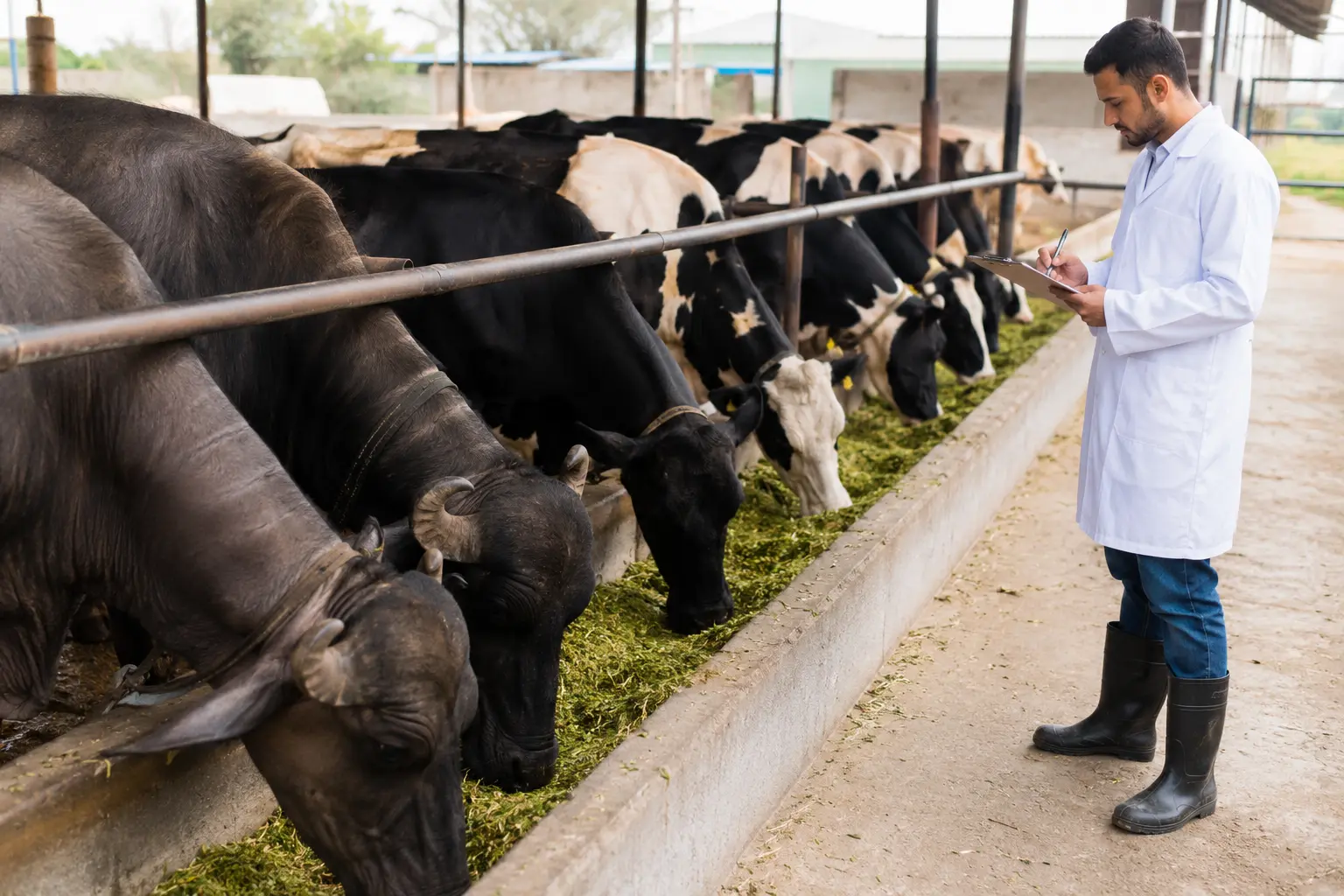
Within a few days you can see intake and dung. Is the animal finishing its feed? Is the dung firm and even? These tell you the transition is going well.
Over two to three weeks you may see coat condition and body condition begin to respond.
Milk yield and fat move last, and they do not move for every animal. Here is the honest position:
- An animal in early or mid lactation has room to respond, and a better-balanced feed can show in the milk pail.
- An animal in late lactation is on the natural downward part of its curve. A good feed can slow that fall — which is worth real money — but it will not push the yield back up, and no feed will.
- A dry or heavily pregnant animal is not going to give more milk now. What you are buying there is the condition she calves in.
So give any feed change at least two to three weeks before you judge it. The first week is transition, not performance.
Fat percentage: the one that surprises people
Farmers often assume more wanda means more fat. It is frequently the opposite.
Milk fat comes largely from fibre fermentation in the rumen. If concentrate goes up and effective fibre goes down — chopped too fine, not enough long forage, feed fed all at once instead of split — rumen conditions change and fat percentage can fall even as yield rises.
If your fat has dropped after increasing wanda, the answer is usually not more wanda. Check the forage first: enough long fibre, fed alongside the concentrate, and the daily amount split across feedings rather than dumped in one go.
Things that will mask a good feed
Before blaming the feed, rule these out:
- Water. Milk is mostly water. A cow short of water eats less and milks less.
- Heat. In Punjabi summer, intake falls. Shade, fans and water matter more than any feed change.
- Amount. Feeding below what the animal needs will not show a feed's value. Use the feed calculator as a starting point and adjust from there.
- Health. Mastitis, lameness, parasites and mineral deficiency all show up as "the feed isn't working."
Write it down
You do not need a computer for this. A notebook with three columns is enough: date, litres, and anything unusual. Take the reading at the same time each day.
Without a record you are comparing today's memory to last month's memory, and memory is generous to whatever you have just spent money on. With a record you can see the actual trend — and you will know, honestly, whether a feed is working for your animals.
Talk to us before you switch
Tell us the animal, its stage of lactation, what forage you are feeding and how much wanda you give now. Get in touch and we will tell you what to expect — including when the honest answer is that a feed change is not the thing that will help.
This article offers general guidance for farm management and is not a substitute for advice from a qualified veterinarian or animal nutritionist. Every animal and every farm situation is different.