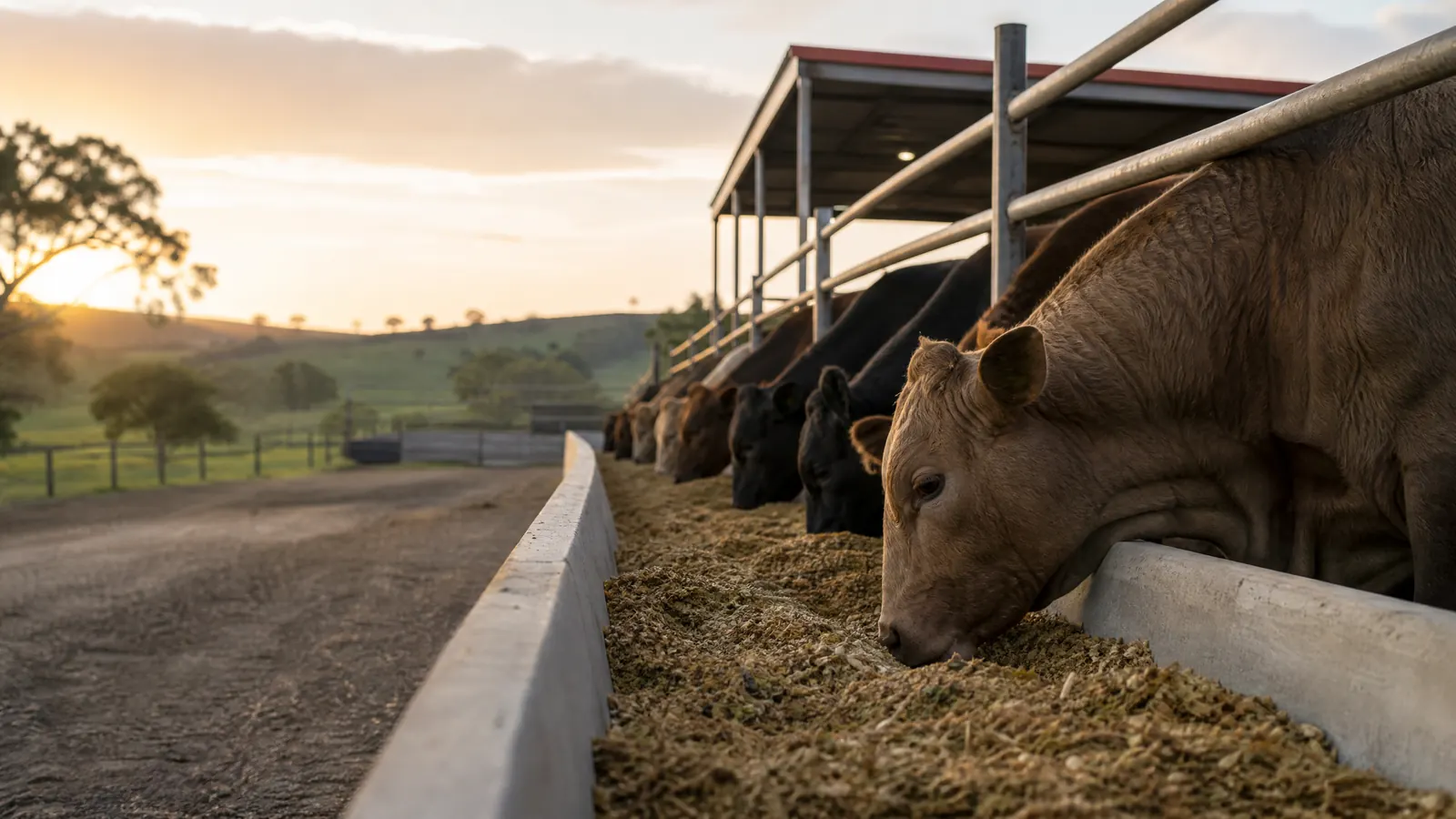
Fattening is the one livestock job where you can work out the answer before you begin.
Start with a weight and a date
You need three numbers: what the bull weighs today, what you want it to weigh on sale day, and how many days you have between now and then. Divide the weight difference by the number of days, and you have the daily gain your programme has to deliver.
Now be honest about whether that number is possible.
In a 120-day feedlot study on Pakistani breeds, calves starting at around 120 kg at nine to twelve months of age gained roughly 640 grams a day for Cholistani, 750 grams for Lohani, and about 890 grams a day for Dhanni and for Friesian-Sahiwal crossbreds. That is well-managed feeding with a complete ration. So 600 to 900 grams a day is the honest working range, and breed and starting age decide more of it than the bag you buy.
If your arithmetic needs 1.5 kg a day, the plan is wrong, not the feed. Either give the animal more days, or buy a lighter animal, or accept a lower sale weight.
The mistake that costs the most money
Digestive upset is one of the most common problems in confined cattle, and almost all of it is caused by concentrate going up faster than the rumen can adapt.
The microbes in the rumen are the ones doing the digesting, and they are matched to whatever the bull has been eating. Push a large amount of concentrate in quickly and the rumen turns acidic: the bull goes off feed, dung goes loose, and you lose a week of gain trying to get him eating again. A bull that goes off feed twice in a fattening cycle will not hit your target, whatever is in the bag.
A step-up schedule you can actually follow
Work in steps of three to four days, and hold a step whenever intake dips:
- Days 1–4: about a quarter of the concentrate you intend to finish on, fed alongside the normal forage
- Days 5–8: about half
- Days 9–12: about three quarters
- Day 13 onwards: the full amount
Fourteen days is a reasonable transition for a bull that has never had much concentrate. There is no benefit in doing it in five. If appetite drops at any step, stay there for two more days rather than moving up.
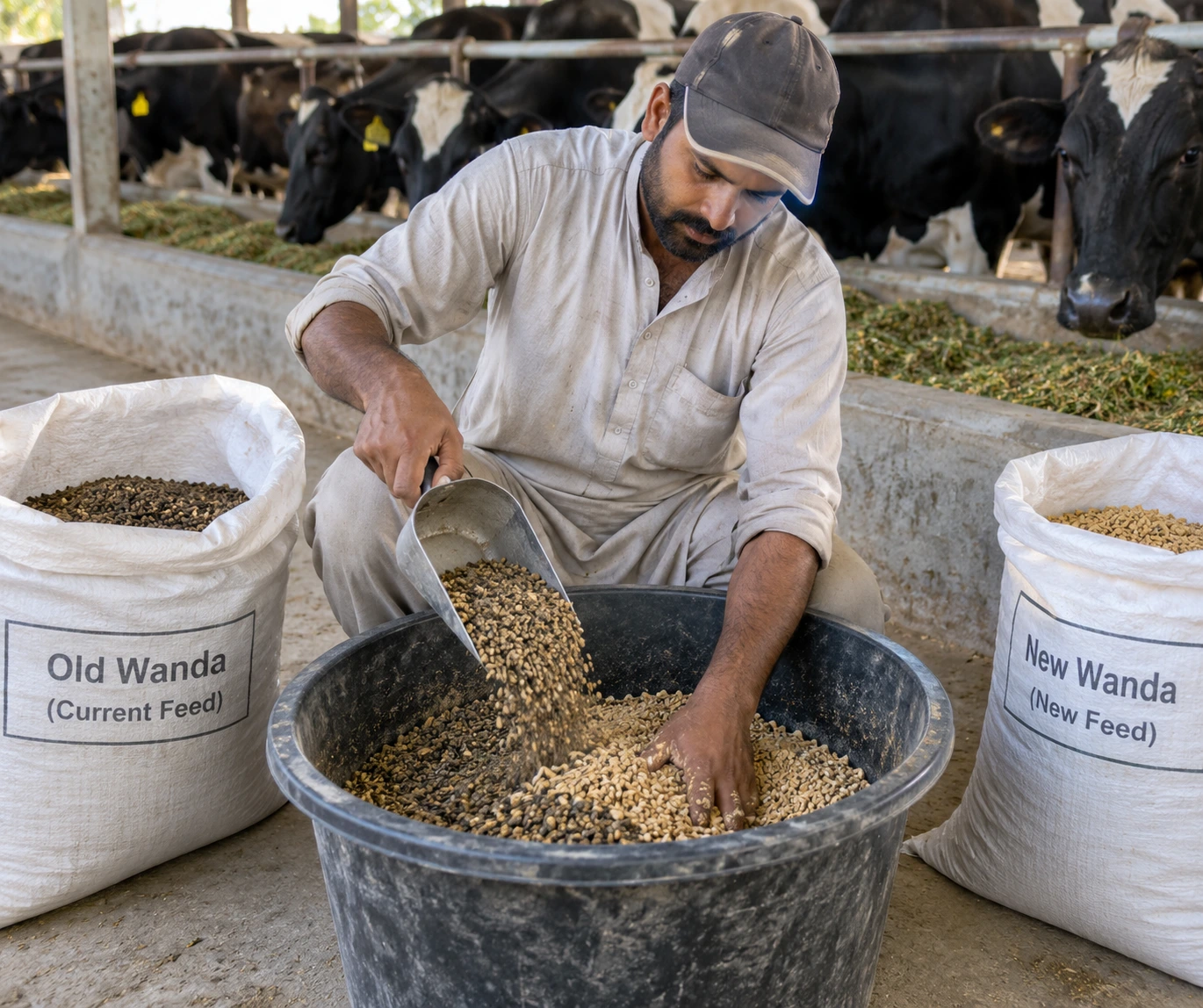
Our article on switching to a new wanda covers the same principle in more detail.
Do not take the fibre away
This is the part people get wrong once they see the weight going on. Concentrate goes up, forage quietly goes down, and the rumen loses the long fibre it needs to keep working normally.
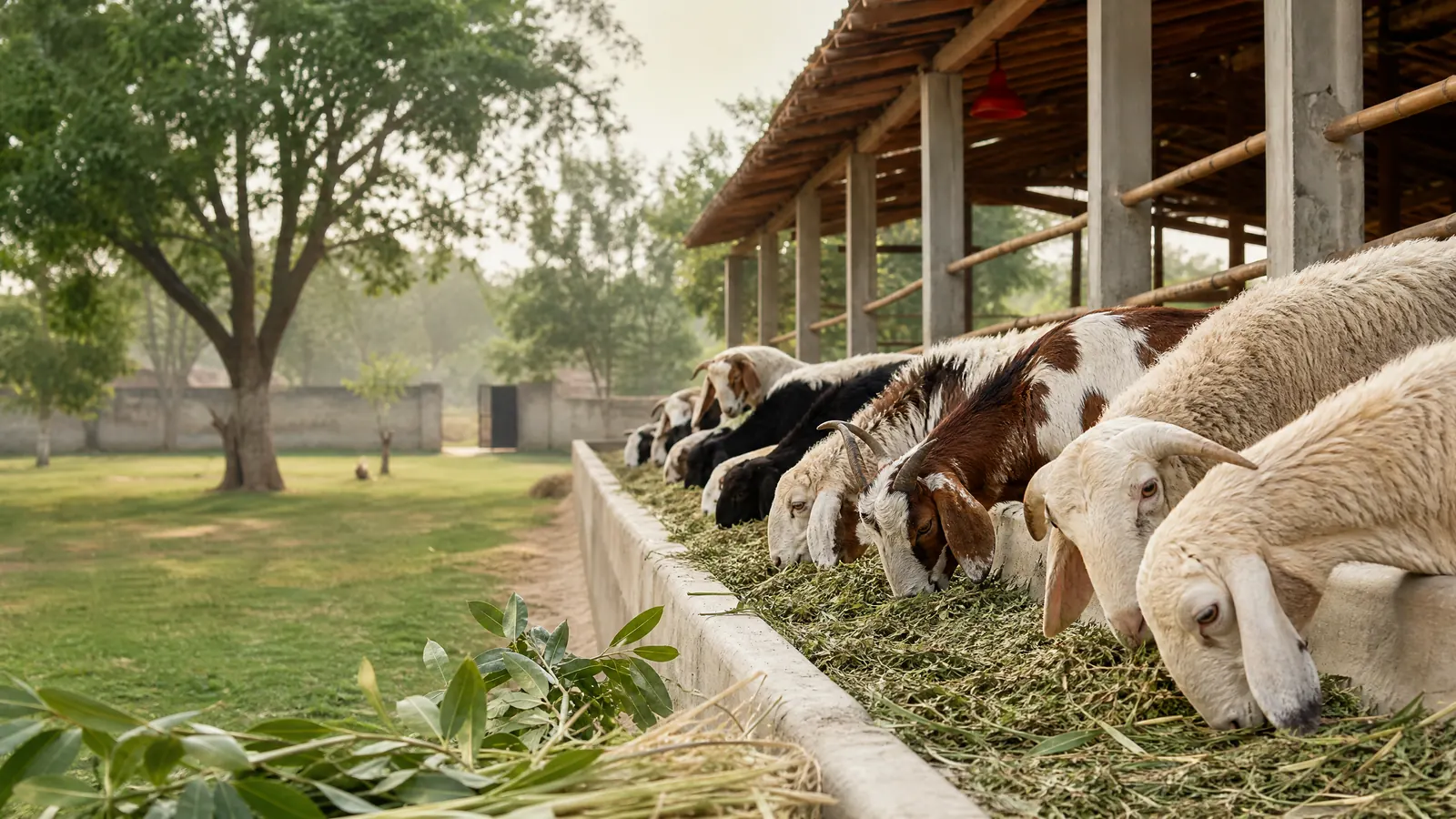
Keep long, coarse forage in front of the bull throughout the programme. Feed the concentrate split across two or three feeds a day rather than one large amount. A bull that eats his whole day's wanda in twenty minutes is a bull heading for an acid rumen.
Water, shade and space
In Punjabi summer, heat cuts intake before anything else does. A fattening bull that cannot get into shade, or that has to fight for water, will not gain what he should no matter what you feed him. Clean water in front of him at all times is not a detail — it is part of the ration.
Space matters too. Bulls that are crowded eat less and fight more, and a lame bull stops gaining.
Measure, do not guess
Weigh the animals if you can. If you cannot, a weighing tape around the heart girth is far better than looking at them, because you see them every day and your eye adjusts.
Take a measurement on day one and then every three or four weeks. Write it in a notebook with the date. This is the only way you will know, at day forty, whether you are on track or whether the plan needs changing while there is still time to change it.
Where Meat Max fits
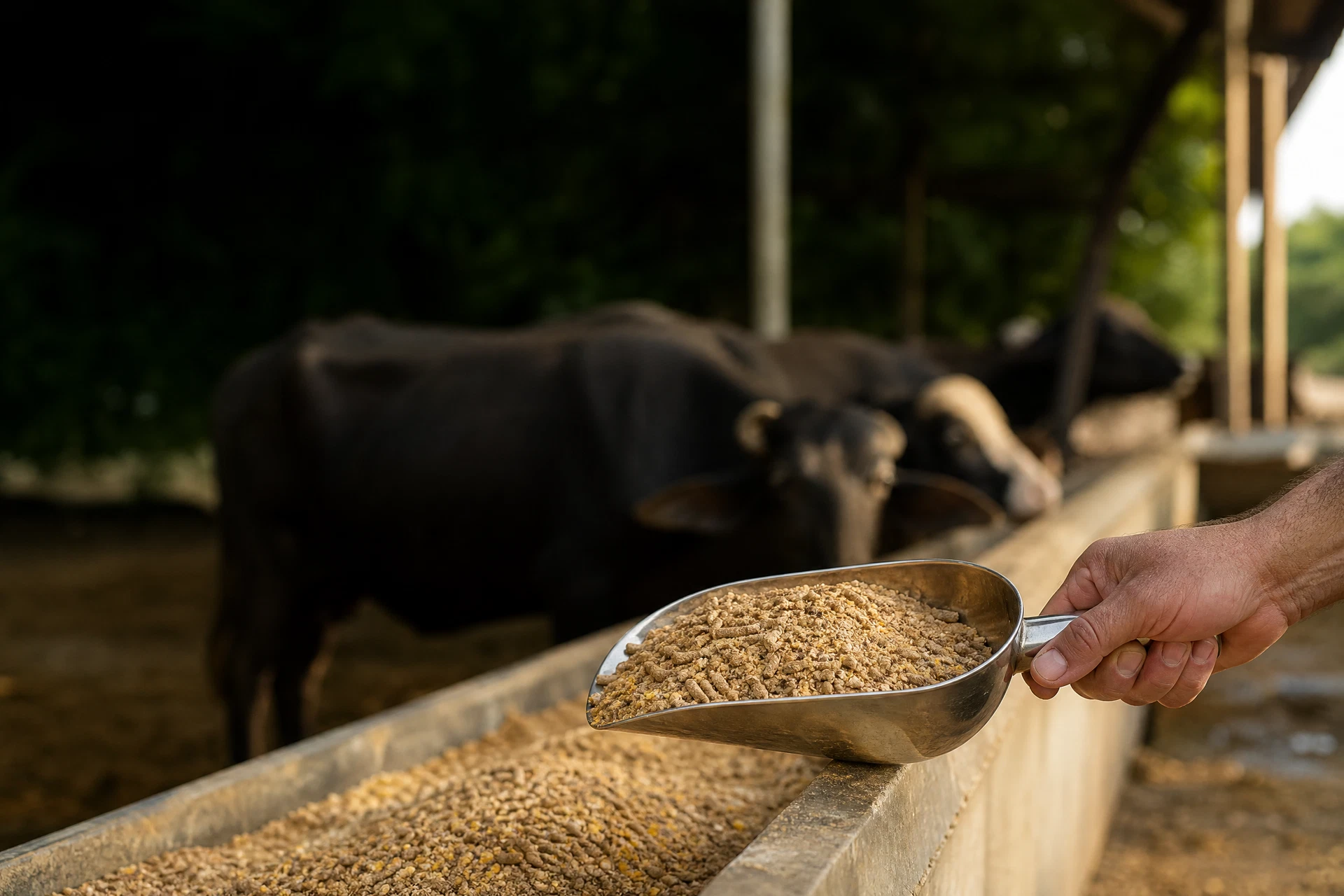
Meat Max is our fattening feed for bulls: 17 to 18 percent protein, available in pellet and mash, in a 40 kg bag. It is the concentrate side of a fattening programme — it is designed to be fed alongside forage, not instead of it.
Use the feed calculator for a starting amount based on the bull's weight, then adjust from what you actually see at the manger.
When to stop and ask
Call a veterinarian promptly if a bull goes off feed for more than a day, stands apart from the group, goes lame, bloats, or passes loose or very pale dung. In a fattening programme these are not things to watch for a few days — a bull losing condition mid-programme is losing your money every day.
Tell us the breed, the current weight and your target date and we will tell you honestly whether the timeline works.
This article offers general guidance for farm management and is not a substitute for advice from a qualified veterinarian or animal nutritionist. Every animal and every farm situation is different.