Ask ten feed companies which wanda is best and you will get ten answers, and every one of them will be their own bag. So let us start somewhere more useful.
Which wanda is best for milk in Pakistan?
There is no single best wanda. There is a right wanda for your animal, and the thing that decides it is how much milk that animal gives in a day.
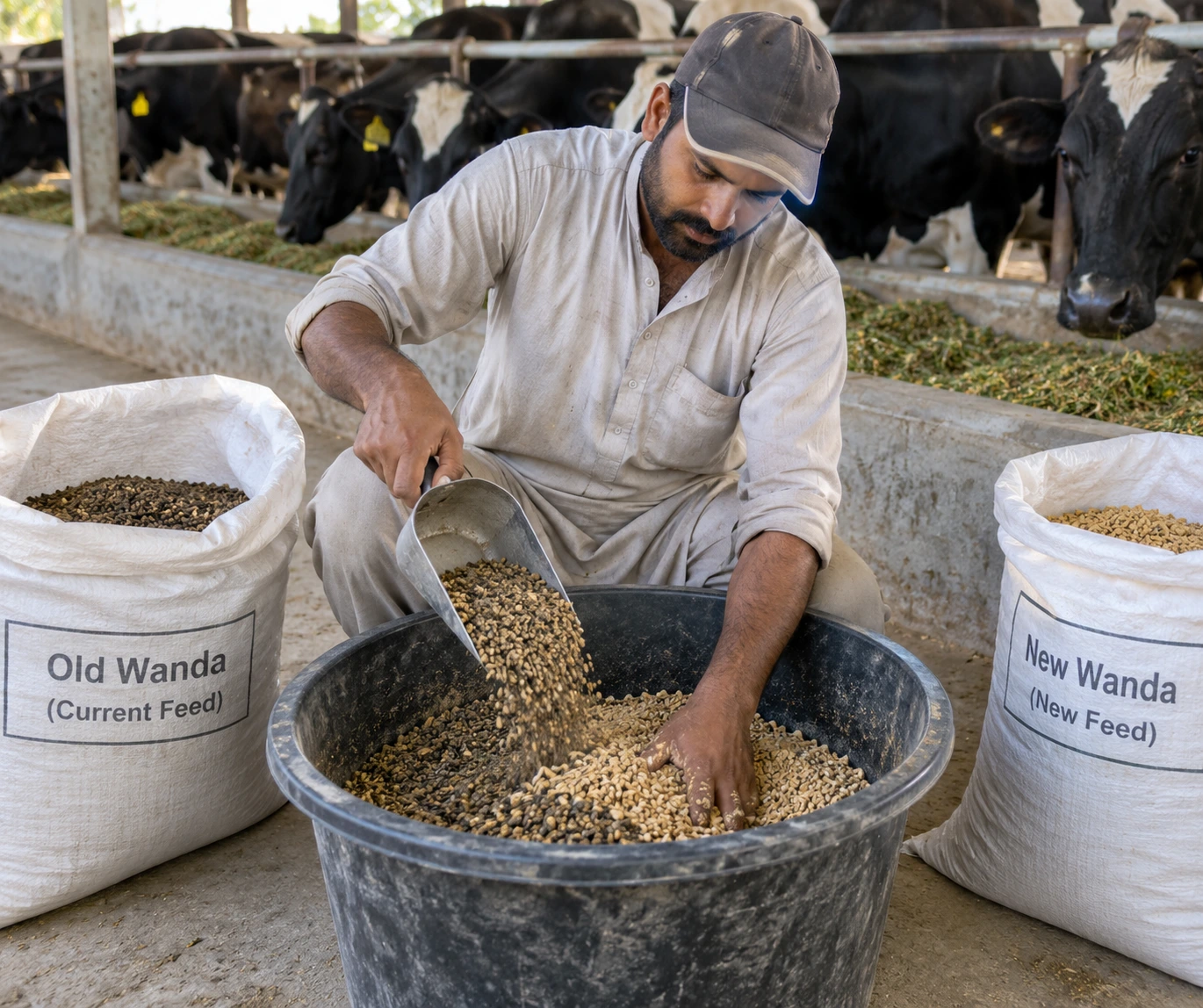
A high-protein wanda is not a better wanda. It is a wanda for a different animal. Feeding 22 percent protein to a buffalo giving six litres does not produce more milk — it produces a more expensive bag, and the extra protein leaves the animal as waste. Feeding 15 percent protein to a cow giving eighteen litres does the opposite: the animal draws the shortfall from her own body, loses condition, and the yield falls anyway.
Match the protein to the daily yield and most feed problems disappear on their own:
- More than 15 litres a day: 20 to 22 percent protein
- Between 8 and 15 litres a day: 17 to 19 percent protein
- Under 8 litres, or a dry or heavily pregnant animal: 15 to 17 percent protein
That is the whole decision. Everything else is detail.
How much wanda should I give per litre of milk?
This is where most farmers are working with half a rule, and the missing half costs them money.
The rule has two parts. The first is the maintenance share — what the animal needs simply to stay alive and healthy, before she gives a single litre. The second is the production share, on top of it.
- Maintenance: about 1 kg a day for a desi cow, about 1.5 kg for a crossbred cow or a buffalo
- Production, cow: 1 kg of wanda for every 2.5 to 3 litres of milk
- Production, buffalo: 1 kg of wanda for every 2.5 litres — buffalo milk carries more fat, so it costs the animal more to make
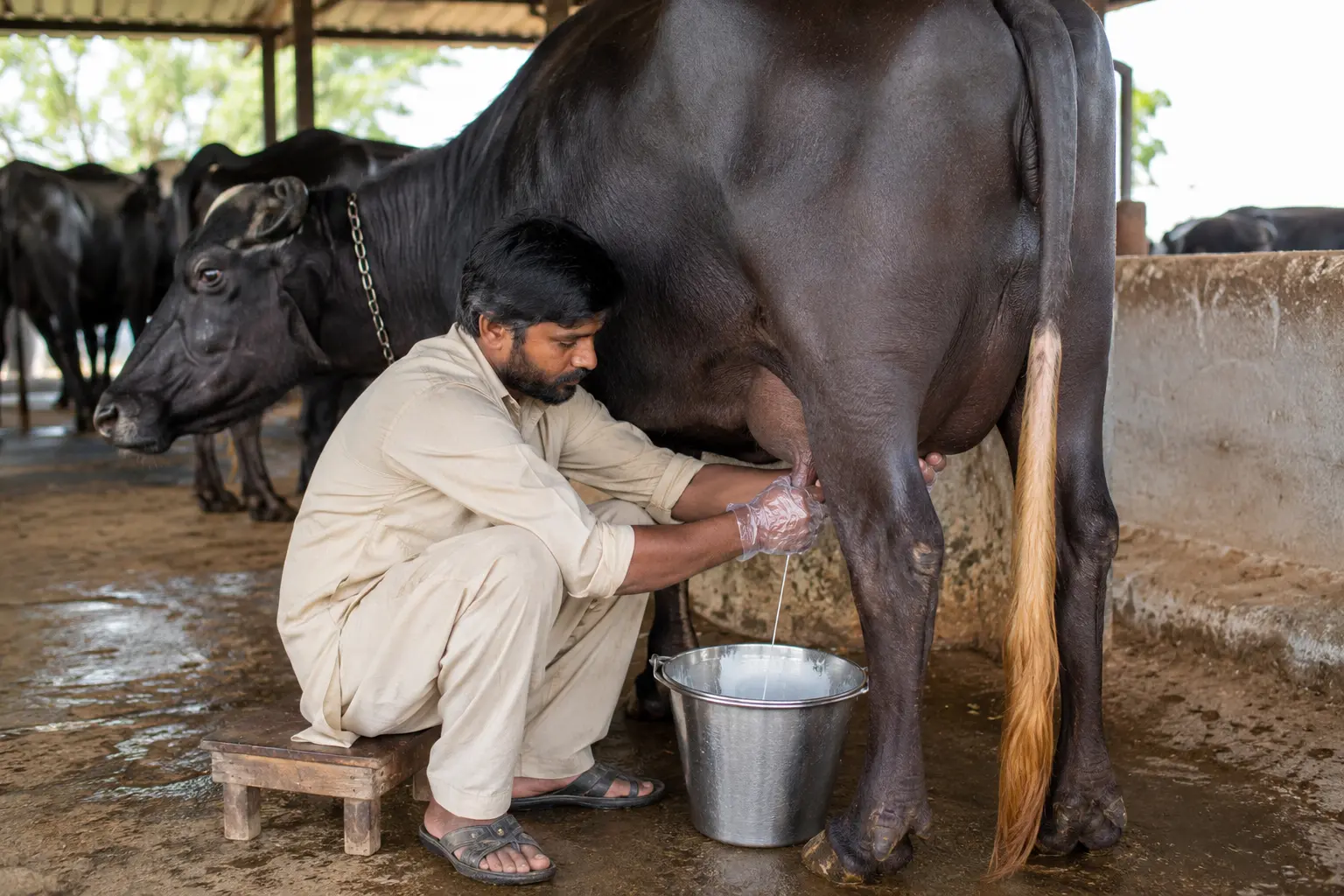
So a buffalo giving 10 litres needs roughly 1.5 kg for maintenance plus 4 kg for production — about 5.5 kg a day, not 4.
Most people feed only the production part and then wonder why the animal is losing condition while the yield slides. She is paying for her own maintenance out of her body.
Two things change this figure. Good green fodder carries part of the load and genuinely saves wanda, so a farm with strong berseem or maize fodder needs less. And the daily amount should be split across two or three feeds rather than dumped in one — a rumen handles 2 kg three times far better than 6 kg once.
Our feed calculator does this arithmetic for you if you would rather not do it by hand.
What is the wanda formula for milking cows?
No honest manufacturer publishes its exact formula, and you should be careful with anyone who claims to — a formula is the one thing a mill actually owns. But you can judge a wanda without it.
A dairy wanda is built from three jobs. Energy usually comes from maize, rice polish and molasses. Protein comes from oilseed meals — canola, soybean, cottonseed. Then minerals, vitamins and, in the higher grades, bypass fat, which passes the rumen undigested and reaches the animal where she needs it for milk.
What matters to you is not the ingredient list on paper but three questions the bag should answer: what is the crude protein, what animal is it for, and what does it weigh. A bag that will not tell you its protein is telling you something.
Where Fouji Wanda fits
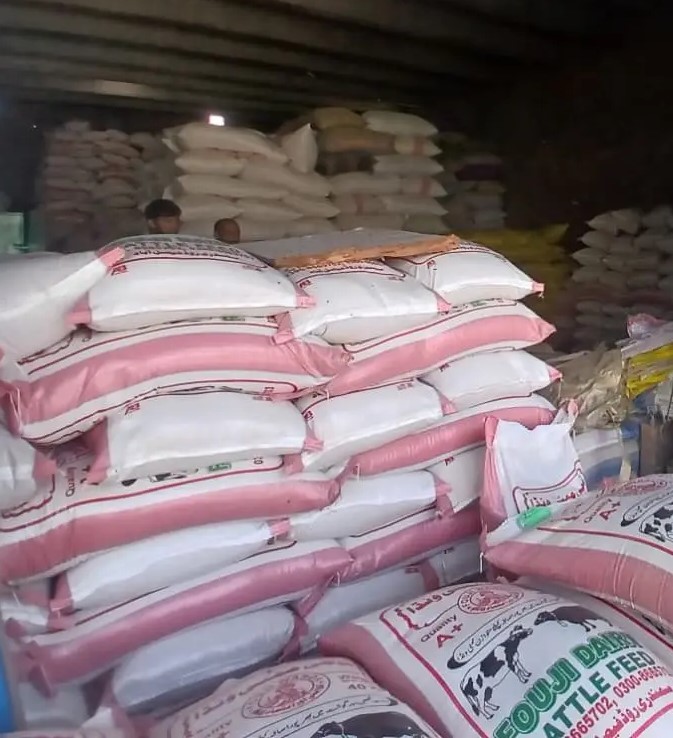
We mill our own feed at Dasuha Pull, Samundri Road, Faisalabad. That matters more than it sounds: a mill that makes its own bag controls what goes into it, and can keep the formulation the same from one month to the next. A farmer's biggest complaint about feed in Pakistan is not price — it is that the bag is not the same bag it was last month.
For dairy animals we make five:
- Fouji Dairy Gold 22 — 20 to 22 percent protein, pellet, 40 kg. Our top dairy feed, for cows and buffaloes at the high end of their yield.
- Dairy Gold 18 Pellet — 18 to 20 percent, pellet, 40 kg. For strong dairy animals in mid lactation.
- Special Wanda — 17 to 19 percent, mash, 40 kg. Canola and soybean meal with bypass fat, built for high-yielding cows and buffaloes.
- Karachi Wanda — 16 to 18 percent, mash, 40 kg. A high-density dairy mash for heavy milk producers.
- A+ Wanda — 15 to 17 percent, mash, 40 kg. For dairy animals at a steadier yield, where a higher grade would only be waste.
Beyond dairy we make Calf Starter for young calves, Meat Max for fattening bulls and Goat Max for goats and sheep.
You will notice we have not told you which one is best. That depends on your animal, and we would rather ask than guess.
What else decides milk, besides the bag
A good wanda cannot fix a farm, and it is worth being plain about that before you spend money.
Water comes first. Milk is mostly water, and a buffalo in milk drinks a great deal of it every day. An animal short of water eats less and milks less, and it looks exactly like a feed problem.
Fodder comes second. Wanda is the concentrate half of the ration, not the ration. Without enough long fibre the rumen stops working properly, and milk fat is the first thing to fall — often at the very moment the farmer has increased the wanda.
Then heat. In a Faisalabad summer intake drops on its own, and shade, fans and water will do more for the milk pail than any change of bag.
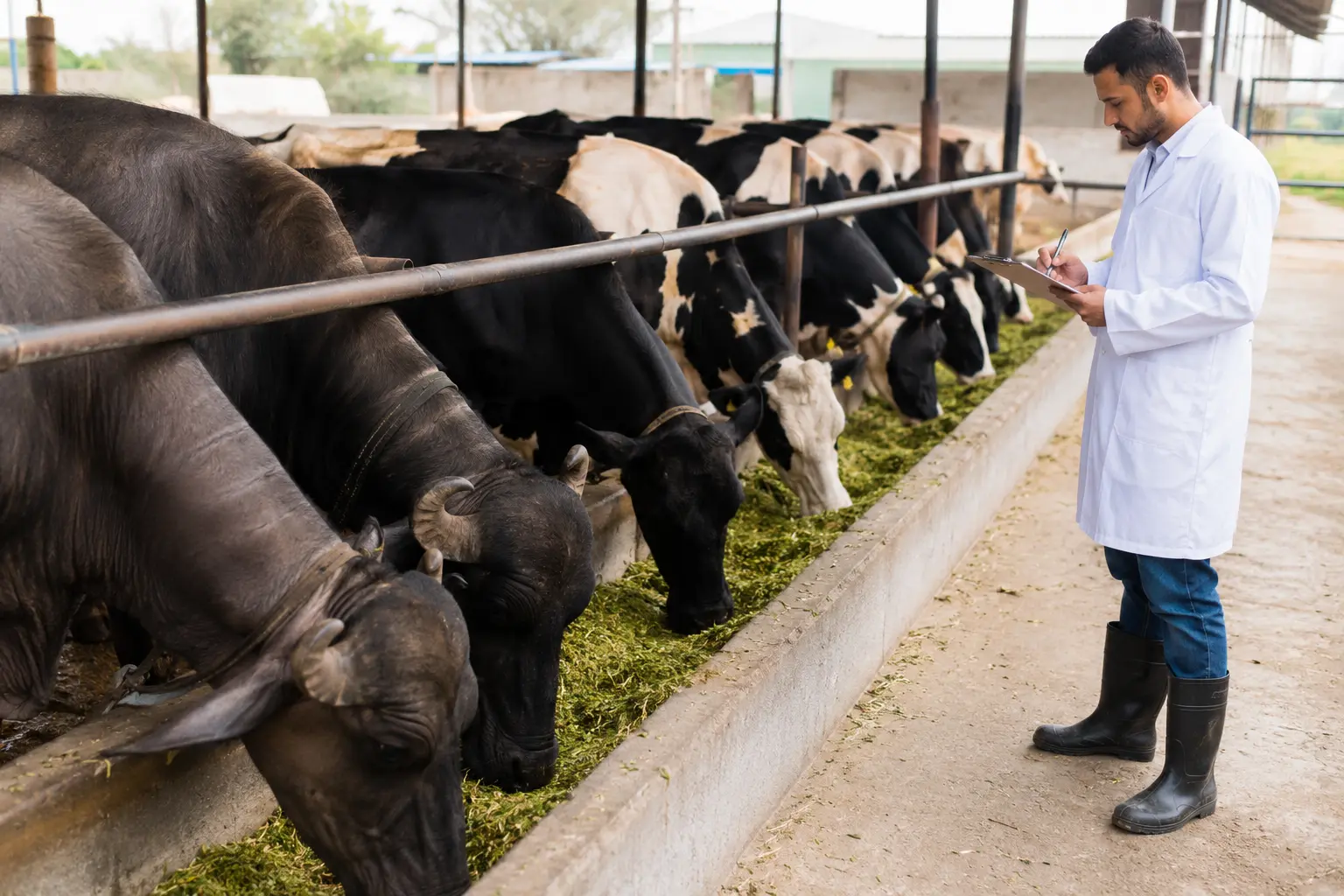
And health. Mastitis, lameness, parasites and mineral shortage all arrive disguised as "the feed isn't working."
Before you switch
Change wanda over five to seven days, never in one. Then give it two to three weeks before you judge it — the first week is transition, not performance. Our guide on switching to a new wanda sets out the day-by-day method.
And keep a notebook: date, litres, anything unusual. Without a record you are comparing today's memory against last month's memory, and memory is generous to whatever you just paid for.
Talk to us
Tell us the animal, whether it is a cow or a buffalo, how many litres a day it is giving, and what fodder you have. Get in touch and we will tell you which Fouji Wanda fits — including when the honest answer is that the feed is not the thing holding your milk back.
This article offers general guidance for farm management and is not a substitute for advice from a qualified veterinarian or animal nutritionist. Every animal and every farm situation is different.