A practical answer
There is no single wanda amount that suits every dairy cow or buffalo. A useful plan starts with the animal group, approximate body size, milk stage, body condition, the fodder it is already eating, clean water, and any recent change in appetite or dung. Copying another farm's routine without these details can lead to the wrong decision.
This is general planning information, not a complete ration prescription or a veterinary diagnosis. If an animal is suddenly sick, off its feed, bloated, has ongoing diarrhoea, a marked change in body condition, a pregnancy concern or a sudden drop in milk, contact a veterinarian or an animal nutrition expert straight away.
Start with the animal group
Do not treat every animal as the same. Growing animals, milking cows or buffaloes, late-pregnant animals, recently calved animals and dry animals all need different things. Start by noting:
- whether the animal is a cow or a buffalo
- its stage: milking, pregnant or dry
- approximate body size and visible body condition
- its daily milk record
- appetite, cud chewing, dung and any change from the usual routine
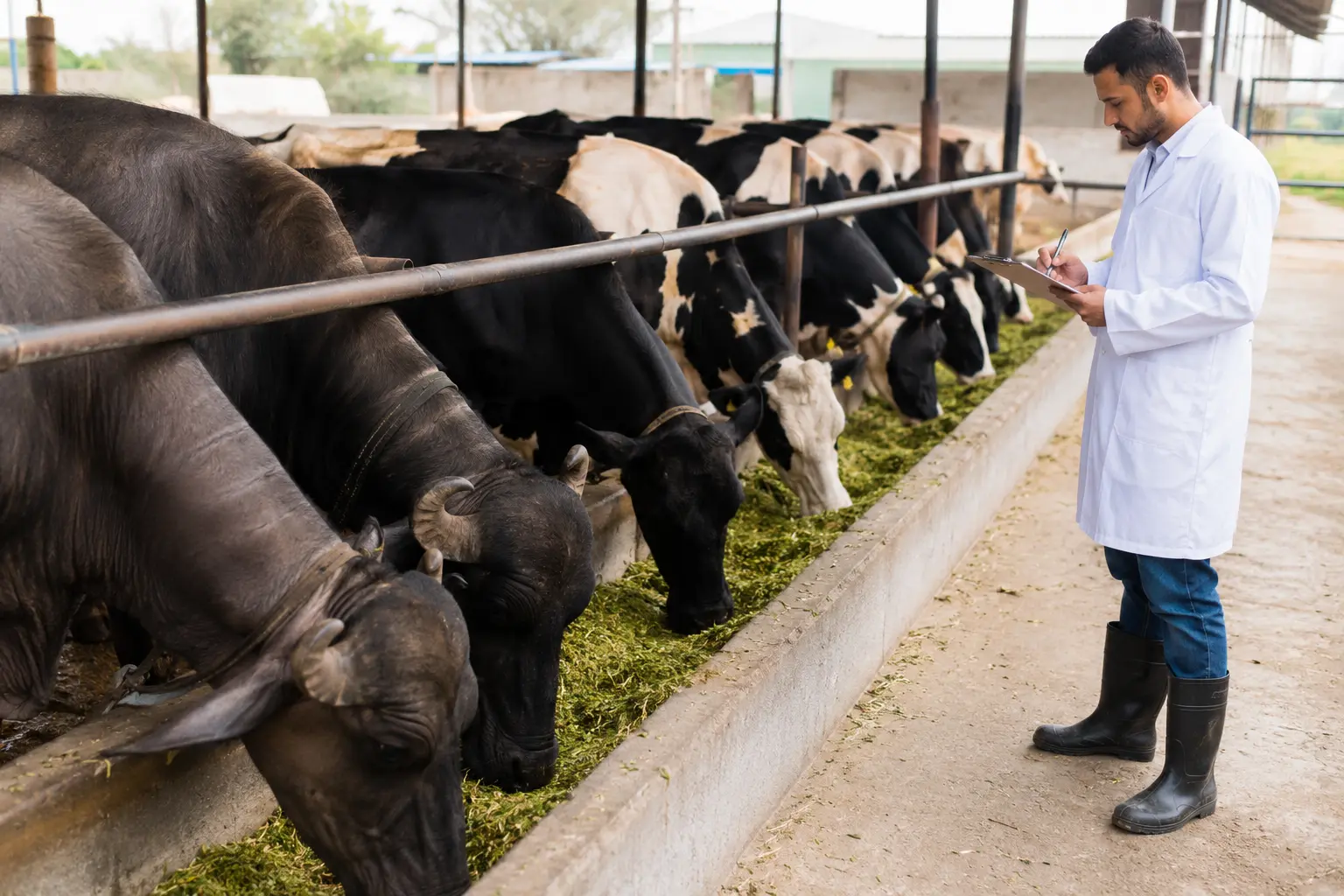
Keep a simple notebook instead of relying on memory: the date, the animal, how much wanda it got, which fodder, how many litres of milk, and anything unusual. The record lets you see changes yourself, and it makes an expert's advice far more useful.
Look at fodder and water first
Wanda is an energy and protein feed given on top of fodder; it cannot replace fodder. Cows and buffaloes are ruminants, so the whole plan has to take in green fodder, dry fodder or silage, fodder quality and a steady supply of clean water.
Before changing wanda, write down what the animal is eating now: the type of fodder, whether it is leaving any, and whether water is clean and easy to reach. If the real problem is fodder quality, water, health or farm management, adding more wanda will not solve it.
How to estimate the amount
Think of a milking animal's wanda in two parts:
- The body's own share: about 1 to 1.5 kg a day, just to keep the animal healthy. Less when there is plenty of good green fodder.
- The milk share: 1 kg for every 2.5 to 3 litres of cow milk, or for every 2 to 2.5 litres of buffalo milk.
Split the day's wanda into two or three feeds. This is an estimate, not a final word: watch the animal's condition and milk, and adjust. Work out your own animal's amount with the feed calculator.
Read the label and choose by purpose
Read the product name, the animal it is meant for, the feed form, the protein, the bag weight and the feeding directions. Choose a Fouji feed by the animal group and the whole diet, not by bag colour or another farm's routine.
Compare every wanda in the Fouji feed range. How to pick the right wanda for the daily yield is explained in Which is the best wanda for milk?
Change slowly and keep watching
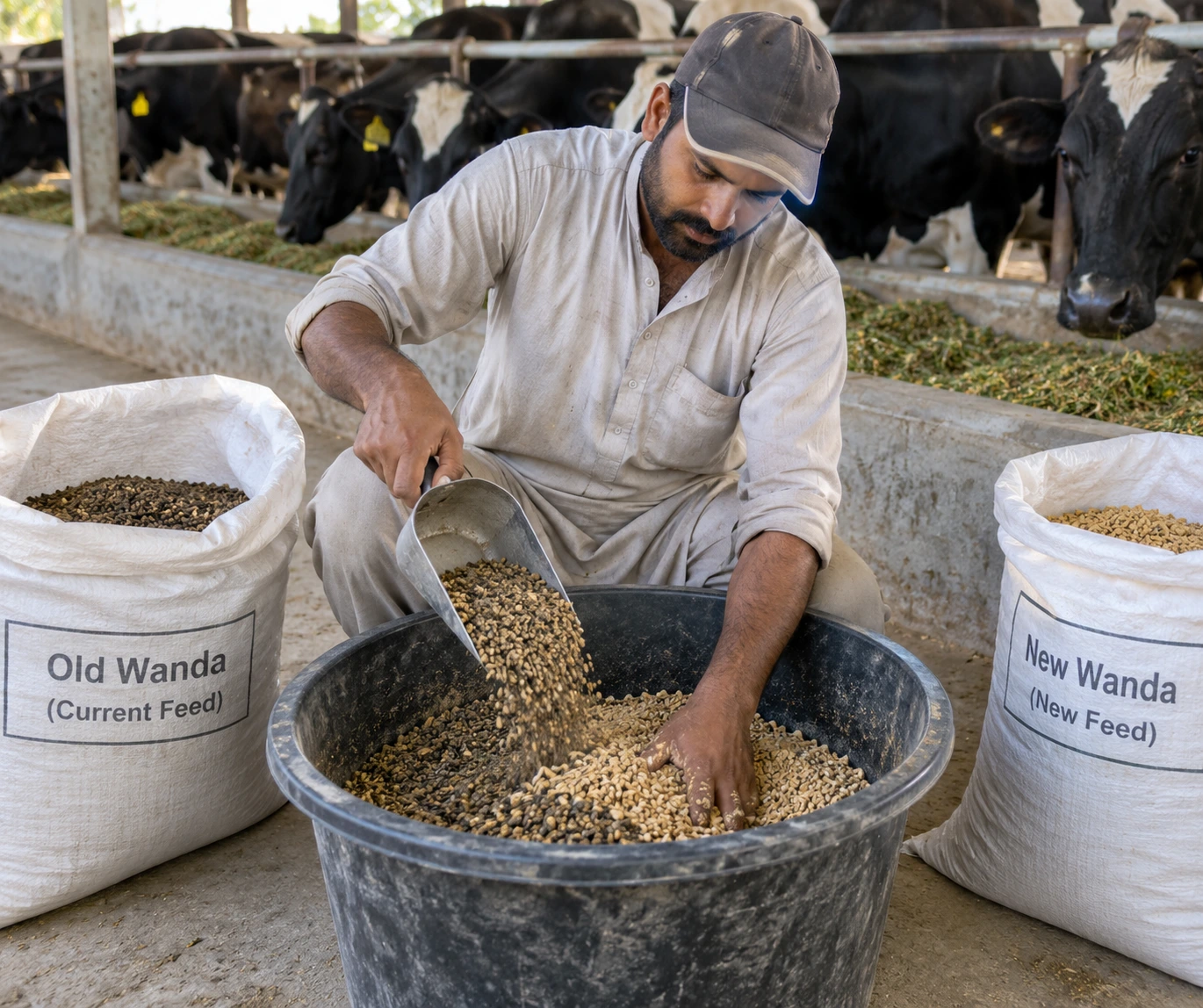
Never change wanda in one day. Mix the new wanda in slowly over seven to ten days, and keep fodder and water the same while you do. Keep noting appetite, cud chewing, dung, milk and general behaviour. Give a new wanda two to three weeks before you judge it; the first week is transition, not performance.
If a problem appears after a change, do not keep adding feed in the hope of fixing it. Pause the change and ask an expert. The day-by-day method is in our guide on switching to a new wanda.
Pellet or mash: choose practically
Pellet and mash are feed forms; neither is automatically better. The right choice depends on the animal group, your feeding routine, where you store the bags, and which form the animal eats well. If you move from one form to the other, change over seven to ten days as well.
Common mistakes to avoid
- Treating one amount as right for every cow or buffalo.
- Feeding only the milk share and forgetting the body's own share.
- Ignoring fodder, water, body condition and the rest of the diet.
- Changing feed suddenly and not watching the animal.
- Treating a sudden milk or health problem as only a feed-quantity problem.
Frequently asked questions
Does wanda alone raise milk yield?
No. Wanda works together with good fodder, clean water and overall farm management. On its own it is not the whole answer.
How do I know if my animal needs more wanda?
Watch appetite, body condition, the milk record and dung for a few days, and compare them with the fodder and water it already gets. If the animal is losing condition while the milk also falls, the body's own share is often not being met. If the change is sudden or unclear, ask an expert rather than deciding alone.
Can I switch feed brands or forms suddenly?
No. Change over seven to ten days. A sudden switch upsets the rumen, and it makes it hard to tell what caused any change you see in the animal.
When to get farm-specific help
Get prompt advice from a veterinarian or an animal nutrition expert for an animal that has just calved, is in late pregnancy, is weak, sick or unusually thin, has a sudden drop in milk, keeps eating poorly, is bloated, has repeated loose dung, or may be ill. This article is a planning guide, not a diagnosis or treatment.
Next step
Start with what you already know: the animal group, fodder, water, body condition and milk record. Work out the amount with the feed calculator, look through the Fouji feed range, or contact the Fouji team and we will tell you the right wanda for your animal and today's rate.