Milk production starts with a healthy animal, but producing good-quality milk involves much more than simply milking a cow or buffalo.
Animal nutrition, clean water, comfortable housing, proper feeding, udder hygiene, regular milking, cooling and good farm management all play an important role in maintaining milk production and quality.
For dairy farmers in Pakistan, especially those keeping buffaloes and cows, understanding these factors can help improve farm performance and reduce avoidable feeding and management problems.
What Is Milk Production?
Milk production is the natural process through which a cow or buffalo produces milk after giving birth. Farmers then manage the animal throughout its lactation period through proper feeding, watering, milking and health care.
A dairy animal's milk production is affected by several factors, including:
* Breed and genetics * Stage of lactation * Feed quality * Energy and protein supply * Forage quality * Clean water availability * Animal health * Weather and heat stress * Housing and comfort * Milking routine * Overall farm management
There is no single feeding formula that works equally well for every cow or buffalo. A good dairy feeding programme starts with the animal, its milk production, existing forage and overall ration.
The Lactation Cycle Starts After Calving
A cow or buffalo begins producing milk after giving birth.
The first milk is called colostrum. Colostrum is especially important for the newborn calf because it contains concentrated nutrients and antibodies that support early-life protection. Colostrum should be managed separately from milk intended for the normal food supply.
After the early stage following calving, milk production develops into the normal lactation period. During this time, farmers should pay close attention to feed intake, body condition, milk yield, water consumption and signs of illness.
The animal's nutritional needs also change during different stages of lactation. This is why simply giving the same amount of feed throughout the entire lactation period may not always be the best approach.
Why Nutrition Matters for Milk Production
Nutrition is one of the most important factors affecting dairy performance. The quantity and quality of feed and water a dairy animal receives largely decide its health, its productivity, and the quality and safety of its milk.
A dairy cow or buffalo needs a balanced supply of energy, protein, fiber, minerals, vitamins and water. These nutrients work together rather than independently.
A ration that is high in protein but short of energy may not give the expected results. Similarly, increasing concentrate feed without enough effective fiber and suitable forage can create feeding problems.
The goal should be a balanced ration that supports:
* Milk production * Milk components * Body condition * Normal digestion * Animal health * Reproductive performance * Long-term productivity
Farmers should consider the complete diet rather than looking at wanda or concentrate feed alone.
Forage Is the Foundation of Dairy Feeding
Green fodder and suitable dry roughage are important parts of a dairy animal's diet.
Common forage resources in Pakistan include seasonal green fodders, maize silage, wheat straw and other locally available roughages.
The quality of forage can vary considerably. Mature, poor-quality or improperly stored forage may provide less nutritional value than good-quality forage. This is why the same quantity of wanda may produce different results on two different farms.
Before changing a dairy ration, consider:
* What type of green fodder is available? * How much dry roughage is being offered? * Is the forage fresh and properly stored? * Is the animal eating the complete ration? * How much milk is the animal producing? * What is the animal's body condition?
These observations provide a much better starting point for feed decisions than simply adding more concentrate.
Protein Supports Milk Production and Body Maintenance
Protein is an important part of dairy nutrition.
Milk production requires amino acids and other nutrients supplied through the animal's diet and digestion. Protein sources used in cattle feed can include ingredients such as soybean meal, canola meal and other suitable protein ingredients.
However, more protein does not automatically mean more milk. The ration needs an appropriate balance between protein, energy, fiber and other nutrients.
For example, Fouji Special Wanda is a dairy mash for high-yielding cows and buffaloes, with canola meal and soybean meal, energy from grains, and minerals, vitamins and calcium. It is designed for dairy animals as part of a balanced ration.
Farmers should always consider the existing forage and complete ration when deciding which feed is appropriate.
Energy Is Essential for High-Producing Dairy Animals
Energy is another major factor in milk production.
A dairy animal uses energy for maintenance, movement, body functions, reproduction and milk production. When a high-producing animal does not receive enough usable energy, maintaining milk production can become difficult and body condition may decline.
Energy requirements can be particularly important for animals producing large quantities of milk. This is one reason dairy feed selection should be based on the animal's production stage and complete diet rather than choosing a feed simply because it has a higher protein percentage.
For farmers managing high-yielding buffaloes and cows, Fouji Karachi Wanda is one of the dairy-oriented options in the Fouji feed range, made especially for milking buffaloes and fed alongside good fodder.
Clean Water Is Just as Important as Feed
Water is sometimes overlooked when farmers think about milk production. It should not be.
Milk contains a large amount of water, and lactating animals have significant water requirements. Water intake rises sharply in hot weather, so troughs need to be checked and refilled more often in summer, not left on the same routine used in winter.
Dairy animals should have regular access to clean, fresh water. Poor water availability can affect feed intake and overall animal performance.
Farmers should regularly check:
* Water cleanliness * Water availability * Drinking points * Water temperature during extreme heat * Cleanliness around water troughs
Good feed cannot compensate for poor water management.
Heat Stress Can Reduce Milk Production
Hot weather is a major challenge for dairy farms in Pakistan, especially through the long Punjab summer.
Heat stress depends on humidity as well as temperature. Productive dairy cows start to feel it well before the weather feels extreme to us, and in Faisalabad and much of Punjab that point is passed for months at a time.
A few practical numbers help more than general symptoms:
* Normal respiration rate for an adult dairy cow is about 40–60 breaths per minute. If a meaningful share of the herd goes above roughly 100 breaths per minute, this is treated as an emergency requiring immediate cooling. * Normal body temperature for an adult cow is about 101.5–102.5°F. Several animals reading above 105°F is also considered an emergency. * Even mild heat stress can be linked to a noticeable drop in daily milk yield, and the decline tends to grow with more severe or prolonged heat exposure.
Other signs to watch for include reduced feed intake, more time spent standing than lying down, and general dullness or reduced activity.
Good ventilation, adequate shade, clean drinking water and appropriate cooling practices (such as fans or intermittent water spray in more open sheds) can help animals cope with heat. Farmers should also avoid unnecessary handling, transport or vaccination during the hottest part of the day.
Animal Comfort Affects Dairy Performance
A comfortable animal is more likely to maintain normal feeding, resting and production behaviour.
Important management factors include:
* Clean and dry resting areas * Adequate shade * Good ventilation * Clean feeding areas * Clean water * Proper space * Calm handling * Regular observation
Lameness, poor housing, overcrowding and uncomfortable resting conditions can affect feeding behaviour and overall productivity. Milk production should therefore be viewed as part of the complete farm management system, not a feed-only outcome.
Clean Milking Practices Protect Milk Quality
Milk quality begins before the milk enters the collection container.
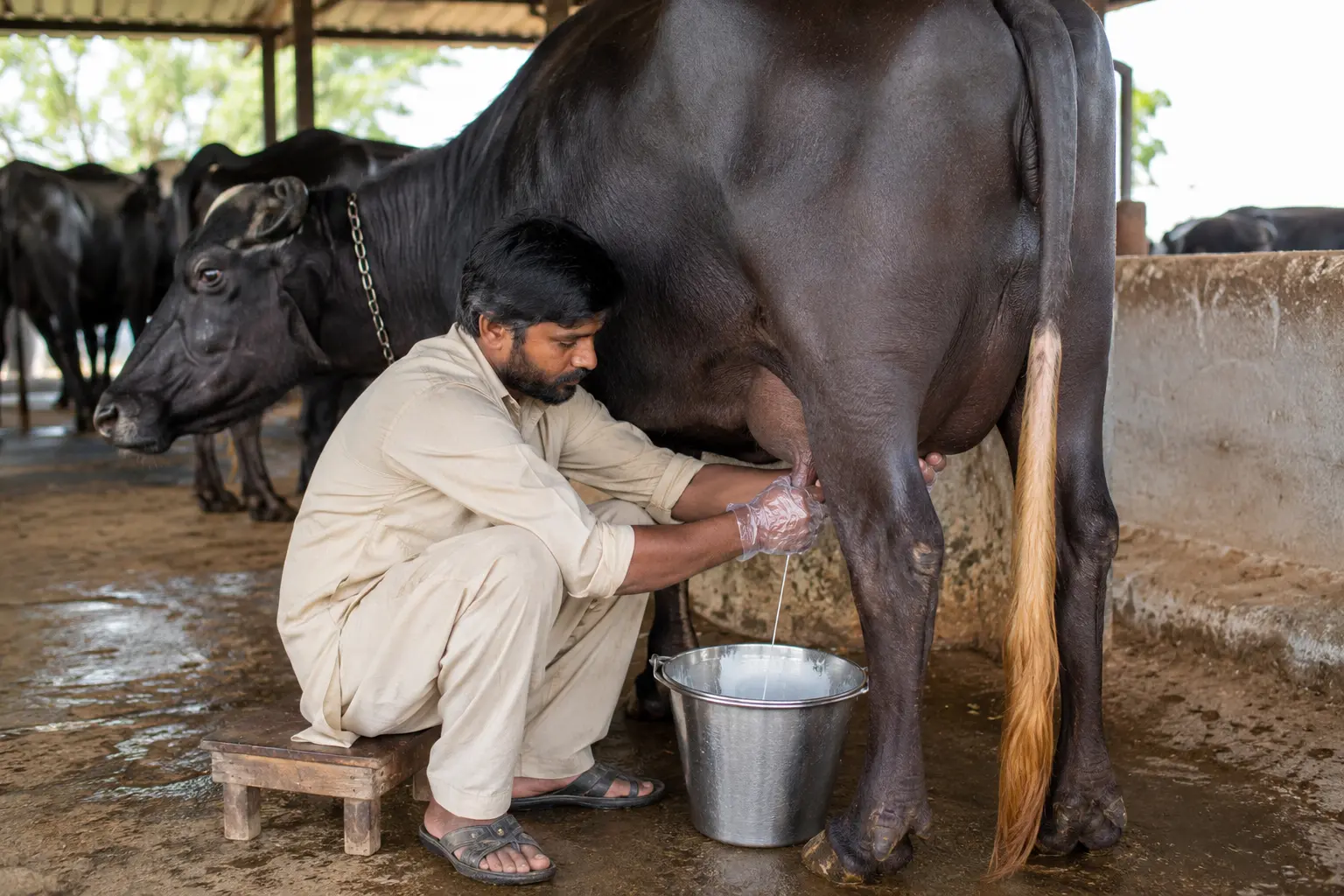
Good milking management exists to keep germs, chemicals and dirt out of the milk, and the milk storage area should be kept clear of animal pathways, mud and other contaminants.
Basic hygiene practices include:
- Keep the milking area clean.
- Check the udder before milking.
- Clean and dry the teats properly.
- Use clean milking equipment.
- Avoid unnecessary contamination.
- Store milk in suitable clean containers, away from the milking area itself.
- Cool milk promptly when appropriate facilities are available.
Milk is highly perishable. Poor hygiene or delayed cooling can allow bacteria to multiply and reduce milk quality.
What Can Reduce Milk Production?
A reduction in milk yield can have many possible causes. Common factors include:
* Poor-quality forage * Inadequate energy * Inadequate protein * Sudden feed changes * Lack of clean water * Heat stress * Udder health issues such as mastitis * Other general health problems * Poor body condition * Reproductive problems * Poor housing * Inconsistent feeding routines
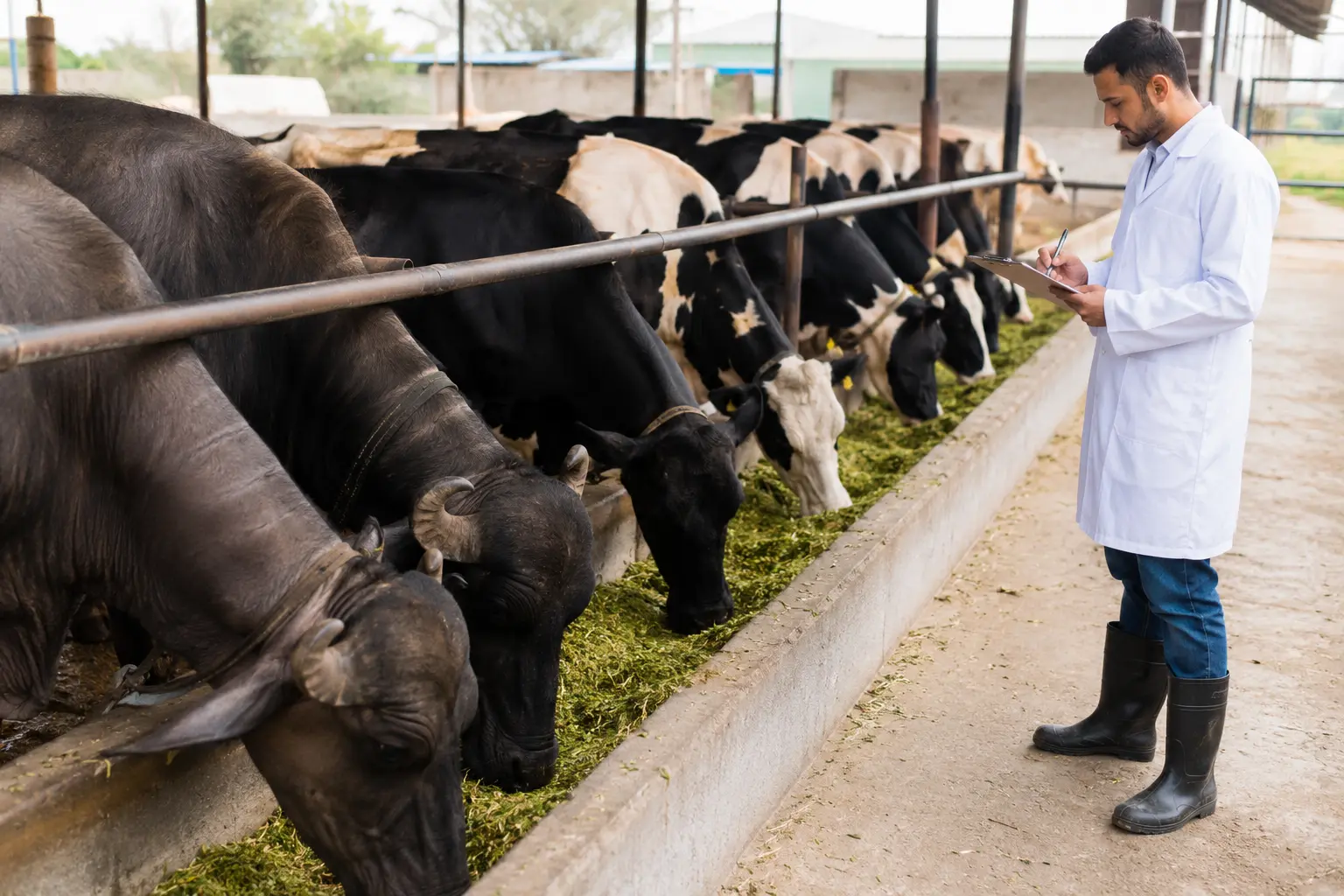
Farmers should not automatically assume that low milk production means they simply need more wanda. The complete feeding and management programme should be reviewed first — forage quality, water access, heat management and housing are just as often the real cause.
If an animal is sick, suddenly stops eating, develops abnormal-looking milk, has a high temperature or shows other concerning symptoms, these signs may indicate a health problem that needs a proper on-farm examination — veterinary advice should be obtained for confirmation and treatment.
Choosing the Right Cattle Feed
The right cattle feed depends on the animal and the farm situation. For example, a milking buffalo has different requirements from a growing calf or a fattening bull.
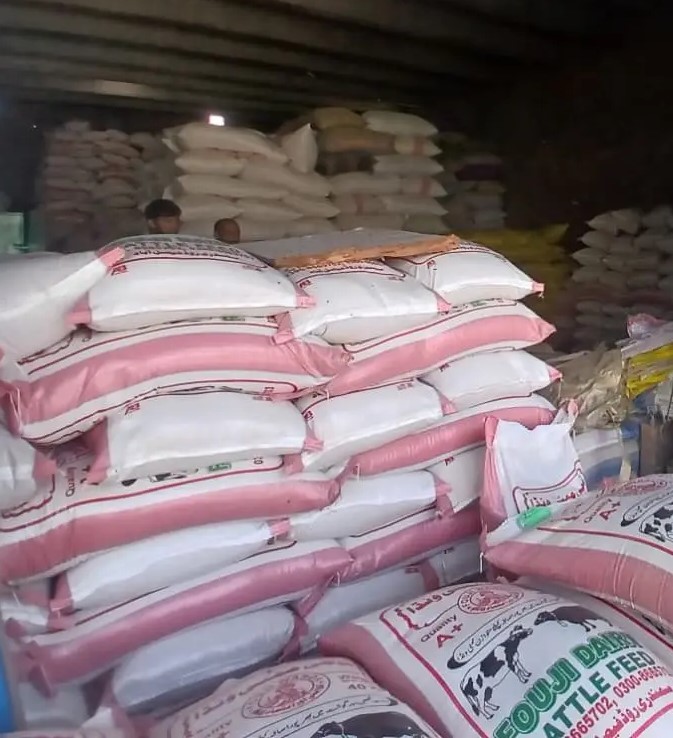
The Fouji Cattle Feed range includes feed options for dairy animals, calves, fattening cattle, goats and sheep. Farmers can review the complete range and compare the intended animal group, feed form, protein range and bag size before making a decision.
For dairy animals, the current Fouji range includes products such as:
* Fouji Dairy Gold 22 * Dairy Gold 18 Pellet * Special Wanda * A+ Wanda * Karachi Wanda
These products have different specifications and intended uses, so farmers should choose according to the animal, production stage, forage and complete ration rather than using one product for every situation.
You can explore the complete Fouji Cattle Feed range before choosing a product. If you'd like more detail on matching a specific product to your herd, our feed selection guide covers that in more depth.
How Much Wanda Should a Dairy Animal Receive?
There is no single amount of wanda that is correct for every cow or buffalo. The appropriate amount can depend on:
* Milk yield * Body weight * Body condition * Stage of lactation * Quality and quantity of forage * Existing ration * Type of concentrate feed * Overall nutritional requirements
This is why a feeding decision should start with the complete ration rather than a fixed quantity.
The Fouji website also provides a Feed Calculator to help farmers use animal and feeding information as an initial planning guide. The calculator is not a replacement for veterinary or professional nutrition advice.
For animals with special nutritional needs, illness, pregnancy, very high milk production or other farm-specific concerns, it's best to consult a qualified livestock nutritionist or veterinarian who can examine the animal directly.
Why Gradual Feed Changes Matter
Suddenly changing the diet can create problems.
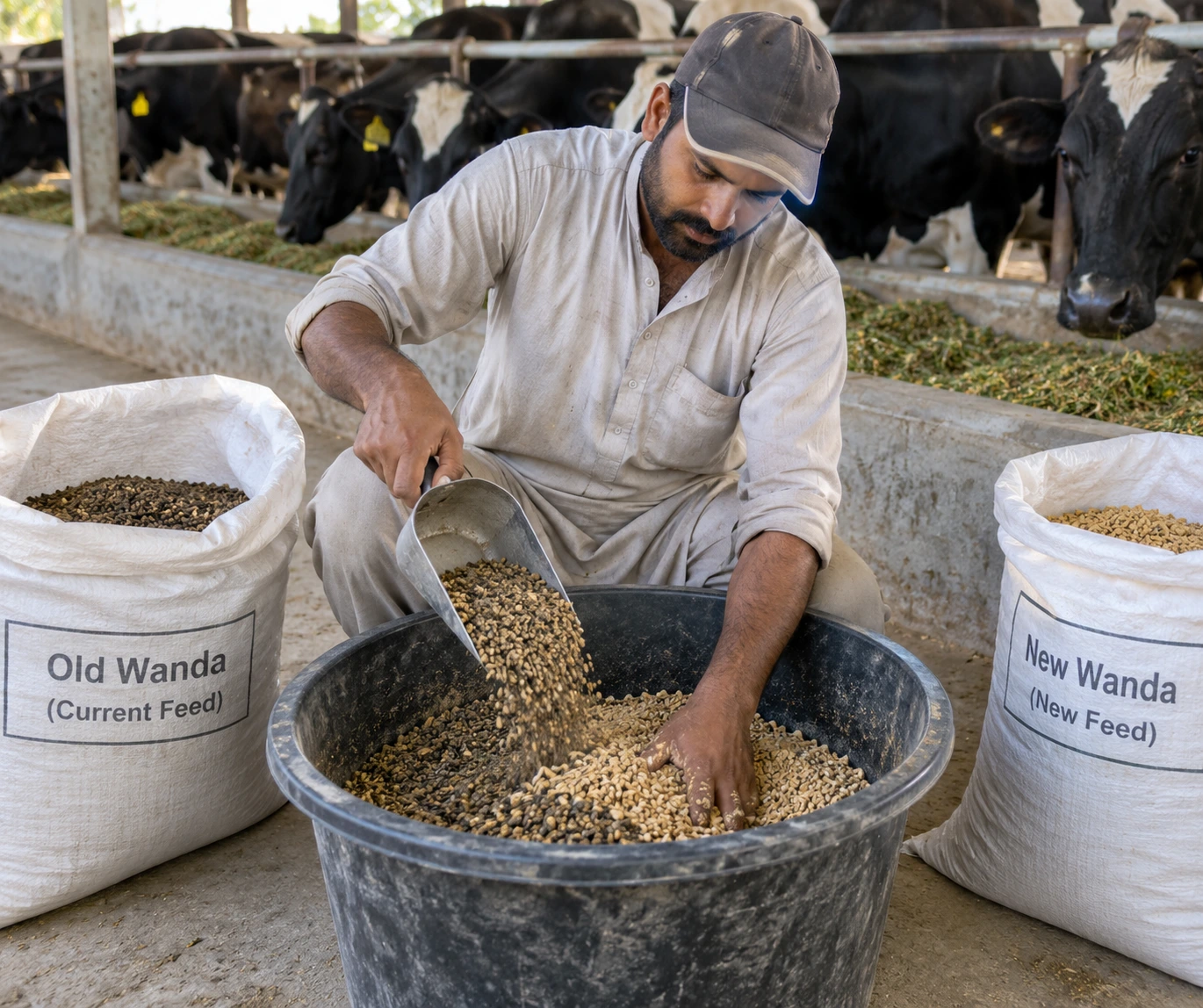
When introducing a new concentrate feed or changing the quantity, farmers should generally make changes gradually while observing the animals over several days.
Watch for:
* Feed intake * Manure consistency * Milk production * Animal behaviour * Body condition * Signs of digestive discomfort
A gradual transition gives the animal's digestive system time to adapt. This is especially important when increasing concentrate levels or changing from one feeding programme to another.
Milk Production Is a Complete Farm System
Producing more milk is not simply about giving more feed.
Successful dairy production depends on the interaction between:
Nutrition + Water + Health + Comfort + Hygiene + Management
A balanced ration can support milk production, but it works best when combined with good-quality forage, clean water, comfortable housing, proper milking hygiene and regular animal observation.
This is the approach behind the Fouji Cattle Feed philosophy: clearer feed information, practical nutrition support and products designed around different livestock production stages.
Final Thoughts
Good milk production starts with a healthy animal and continues with good decisions every day.
Farmers who pay attention to forage quality, balanced nutrition, water, heat management, animal comfort and clean milking practices can create a stronger foundation for consistent dairy performance.
There is no universal feeding amount that works for every cow or buffalo. The best feeding decision considers the individual animal, its production stage, existing forage and complete ration.
If you are looking for dairy feed options for your farm, explore the Fouji Cattle Feed product range or use the Fouji Feed Calculator as a starting point for your feeding plan. For a farm-specific question, you can also contact the Fouji Cattle Feed team.
*This article is for general educational purposes and does not replace advice from a qualified veterinarian or livestock nutritionist for your specific animal or farm.*