Most farmers choose a feed in one of two ways: by the price, or by what the neighbour uses. Both can mislead you. A cheap bag can cost more in the end, and the neighbour's animals may need something different from yours. Here is what to check instead.
Start with the animal, not the bag
Before looking at any feed, be clear about the animal: cow or buffalo, how much milk it gives a day, what stage it is at, and what fodder it gets. The right protein level follows from the daily milk. That part is explained in Which is the best wanda for milk? This guide is about the next step: checking the feed itself.
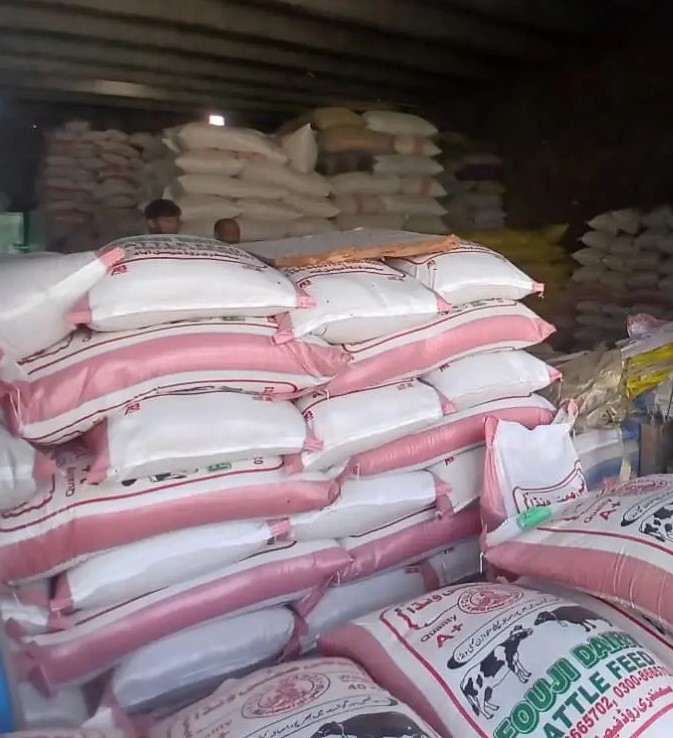
What the bag must tell you
A proper feed bag answers these questions clearly:
- Protein: how much crude protein it contains.
- Animal: which animal and which purpose it is made for.
- Weight: the bag weight.
- Maker: the company name, address and a phone number you can call.
- Directions: how much to feed and how to start it.
If a bag will not tell you its protein, or you cannot find who made it, walk away. A maker who stands behind a feed puts its name and number on it.
Check the quality with your own hands
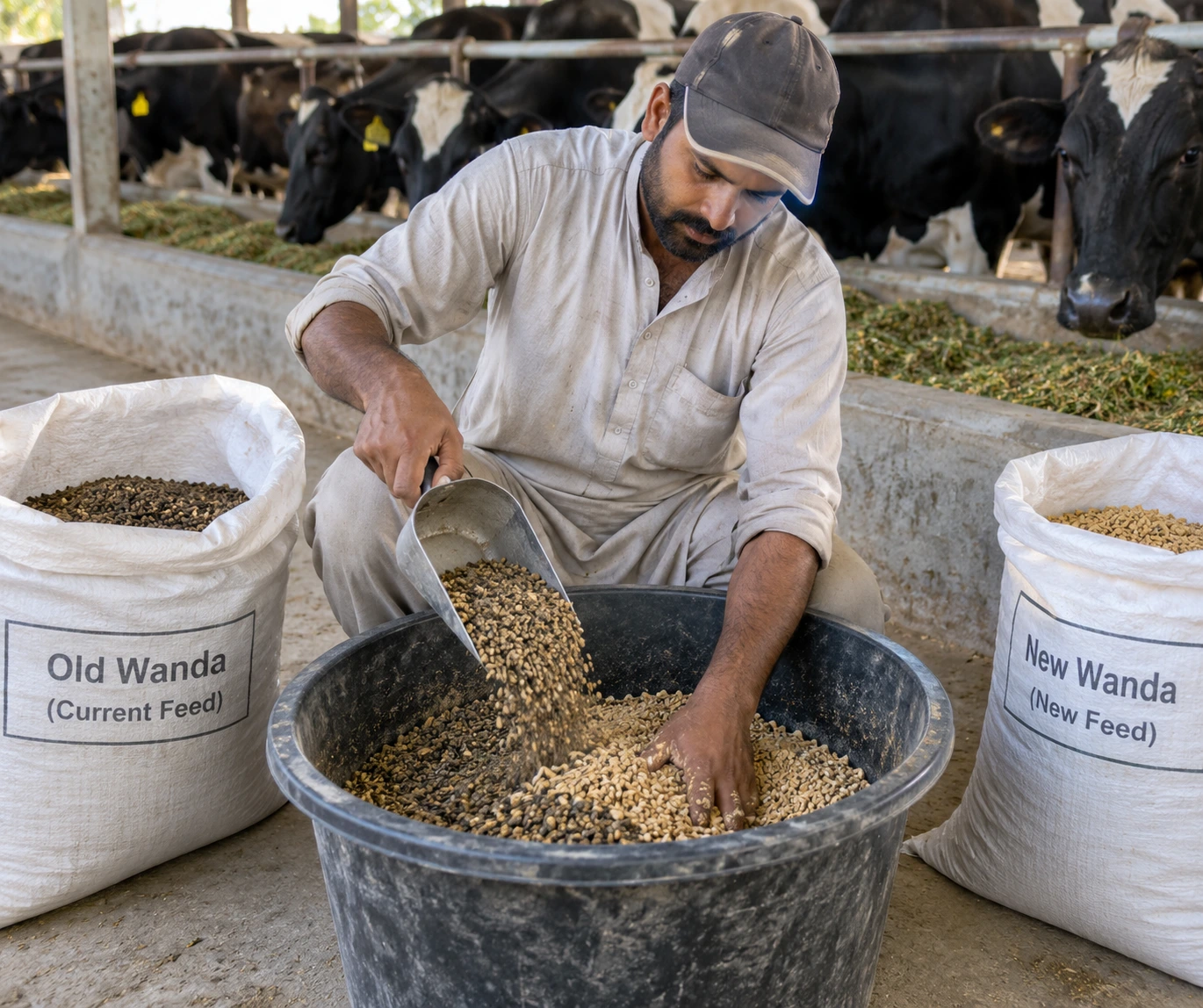
You do not need a lab for a first check. Open a bag, or ask the dealer for a handful, and look at it closely:
- Smell: fresh feed smells of grain and molasses. A musty, sour or burnt smell is a warning.
- Colour: the colour should be even through the bag, without dark or discoloured patches.
- Mould and lumps: look for white, green or black spots and for warm, hard lumps. Mouldy feed should never reach an animal.
- Dryness: feed should feel dry. Damp feed goes mouldy quickly.
- Dust: a little fine material is normal. A bag that is mostly powder has lost value.
- Foreign matter: rub some between your fingers. Rice husk, sawdust, sand or grit have no place in feed.
- Pellets: good pellets are firm and hold their shape. Pellets that crumble to powder in the hand waste feed.
The real test is the animal
A feed proves itself at the manger. Over the first days, watch whether the animal eats it readily and whether its dung stays firm. Over two to three weeks, watch its body condition and milk.
Keep a simple notebook: the date, the litres, and anything unusual. Without a record you are comparing today's memory with last month's memory. Always change feed slowly, over seven to ten days; the method is in our guide on switching to a new wanda.
Pellet or mash?
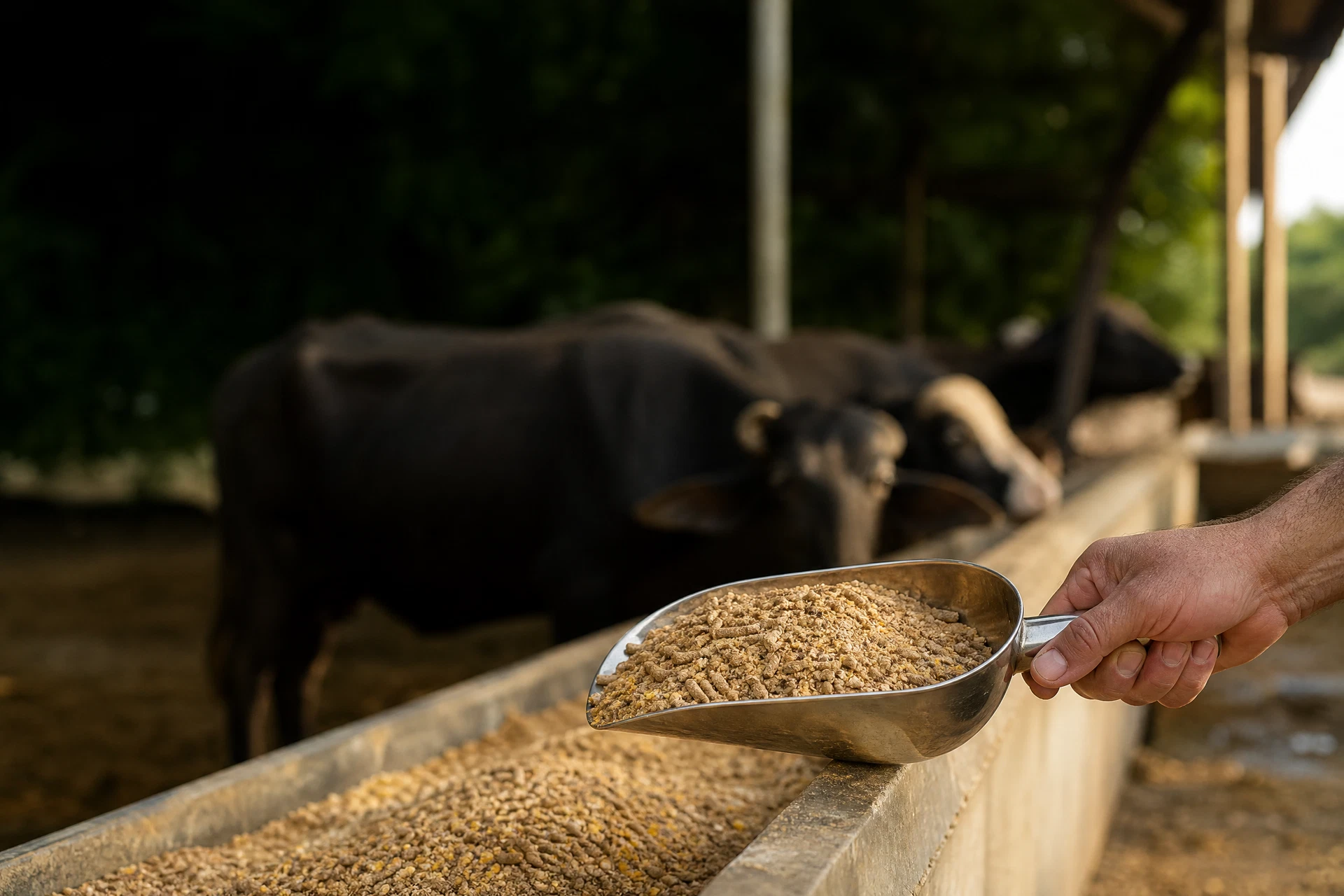
Both forms work. Mash is the traditional loose wanda most animals are used to. Pellets carry the same nutrition in every piece, the animal cannot pick through them, and less is wasted. Choose the form your animal eats well. More on this in What is wanda?
Judge value, not just price
The price on the bag is only half the sum. A cheaper feed that the animal eats poorly, or that gives less milk, is not cheaper. Think about what the bag gives back in milk, condition and health.
Consistency matters as much. One of a farmer's biggest complaints about feed is that the bag is not the same bag it was last month. A feed that changes from month to month makes it impossible to plan.
Store it properly
Good feed can go bad in a poor store:
- Keep bags off the floor, on wooden pallets or bricks.
- Keep them away from walls, in a dry, shaded, airy place.
- Use older bags first.
- Close an opened bag and use it within a few days.
- Keep rats and birds out.
Questions to ask your dealer
- How much protein is in this feed, and which animal is it for?
- Who makes it, and can I call them?
- How old is this stock?
- Will this feed be the same next month?
- How much should I feed, and how should I start it?
Where Fouji Cattle Feed fits
We make our feed at our own mill at Dasuha Pull, Samundri Road, Faisalabad. Every Fouji bag states its protein, the animal it is for and its weight. In Fouji Wanda we do not use rice husk, sawdust, industrial waste, poultry litter, meat and bone meal, slaughterhouse waste or hormones.
For milking cows and buffaloes we make Fouji Dairy Gold 22, Dairy Gold 18 Pellet, Special Wanda, Karachi Wanda and A+ Wanda. For calves, bulls and goats there are Calf Starter, Meat Max and Goat Max. Compare them all on the feed range page.
Talk to us
Tell us the animal, how much milk it gives and what fodder it gets. Contact us and we will tell you which feed suits it, and today's rate.
This article offers general guidance for farm management and is not a substitute for advice from a qualified veterinarian or animal nutritionist.