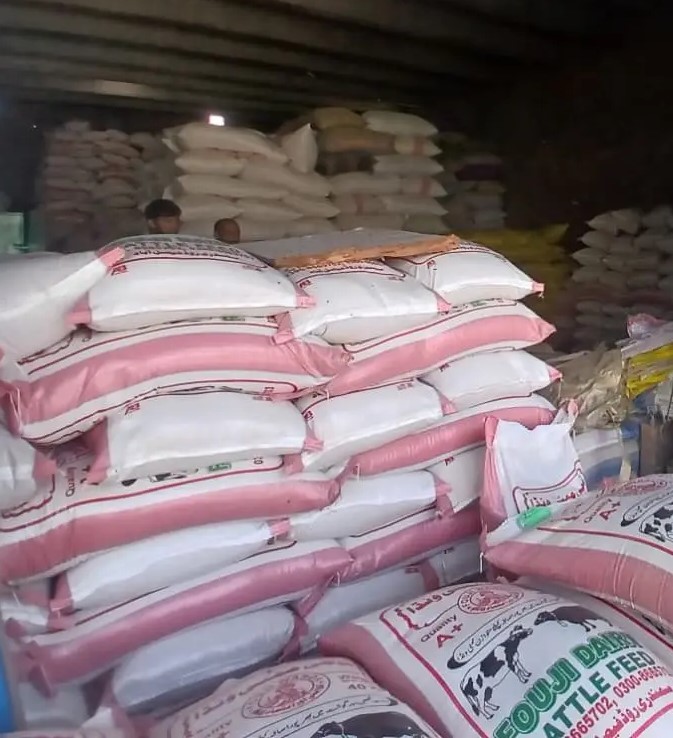
Ask a farmer in Punjab what he feeds his buffalo, and there is a good chance the answer is mamni wanda. It is the loose, crushed feed that has been poured into village troughs for generations, long before pellets came along. It is still what many farmers trust most, because they can see it, smell it and feel it in their hands.
But "mamni" on a bag says nothing about what is inside it. Two mamni wandas can look alike and be very different feeds. This guide explains what mamni wanda is, what a good one contains, how it compares with pellet feed, and how to feed it properly.
What is mamni wanda?
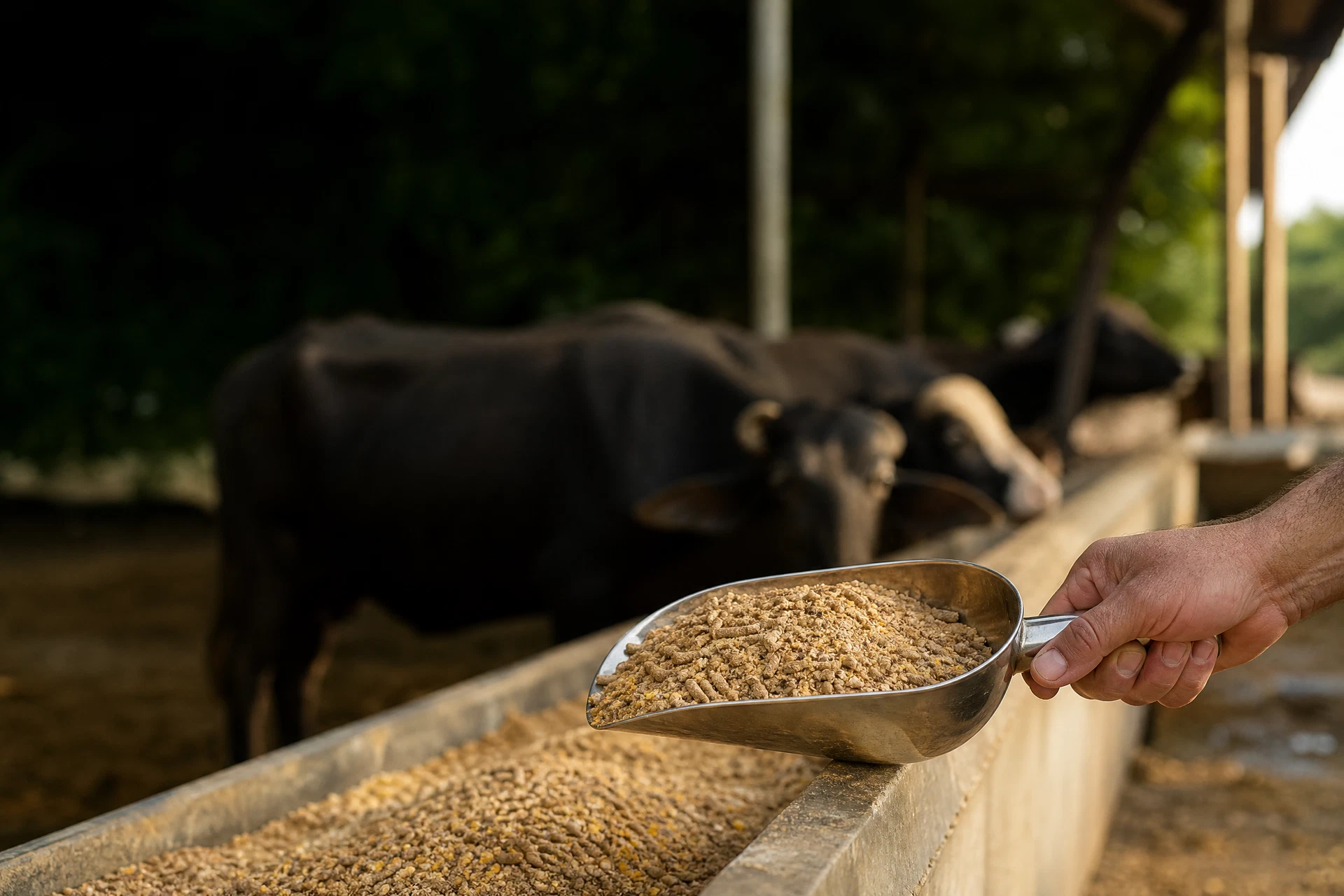
Mamni wanda is a traditional desi wanda sold as a loose mash, not pressed into pellets. The ingredients are ground or crushed and mixed, so you can see the different pieces in a handful: grain, khal, bran and so on.
Like any wanda, its job is to give the animal what green fodder and straw cannot give on their own: more energy and protein for milk, and minerals for health. It is fed alongside fodder, never instead of it. If you are new to the word itself, read what wanda is and how much to feed first.
What goes into a good mamni wanda?
A well-made mamni wanda is a balance of a few groups. Names change with the season and the market, but the groups stay the same:
- Energy: grains such as maize, wheat, barley, sorghum and rice, and molasses for taste and energy.
- Protein: oilseed cakes and meals, such as mustard cake (sarson ki khal), canola meal and soybean meal.
- Fibre: wheat bran (chokar), rice polish and soybean hulls, which keep the mix digestible.
- Minerals and vitamins: a dairy premix and DCP for calcium and phosphorus, which a milking animal loses every day in its milk.
- Stomach care: yeast to help the rumen work well, and a toxin binder that guards against mould toxins in grain.
Mamni wanda also has its own traditional ingredients, the ones farmers' fathers and grandfathers knew:
- Pulse husks: the husks of moong, masoor and black chickpea (kala chana) have long been used in mamni for protein and fibre.
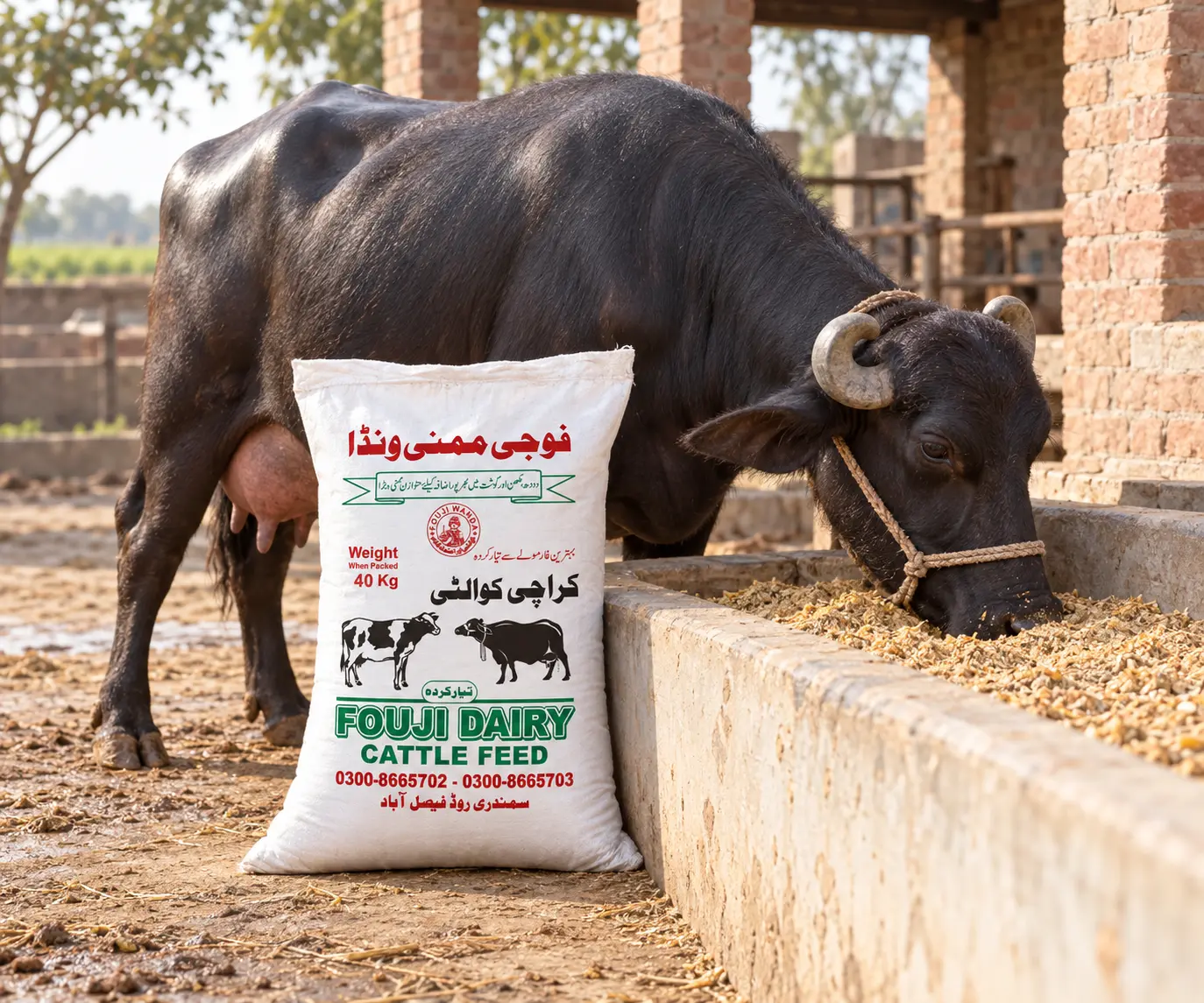
- Karachi mamni: in several parts of Punjab there is a traditional mamni known as Karachi mamni. It is made with the seeds of various herbs and field plants, such as sweet clover (senji), mustard and guar, together with broken wheat. Fouji Karachi Wanda uses Karachi mamni, and that is where its name comes from.
What should not be in it matters just as much. Rice husk (phak), sawdust, industrial waste and cheap bulk fillers make a bag heavier without feeding the animal. A wanda full of them looks like feed and works like straw.
Mamni wanda or pellet?
Both can be excellent feeds, and both can be poor ones. An animal turns away from bad feed whether it comes as mash or as pellets. What decides it is what goes inside the bag and how fresh it is, not the shape.
Mamni wanda has strengths that farmers have trusted for generations:
- Animals eat it all. They know it, like it and leave the trough clean.
- It helps dry fodder go down. In the months when green fodder is short, the mash clings to toori and chopped straw, so animals eat that dry fodder more readily along with it.
- You can see what you are buying. Grain, khal and husk are there in your hand.
- It mixes easily with any fodder, dry or slightly wet.
Pellets have their own practical advantages: every pellet carries the same mix, handling is tidy, and they store easily. Some farms like them for high-yielding animals, such as Fouji Dairy Gold 22.
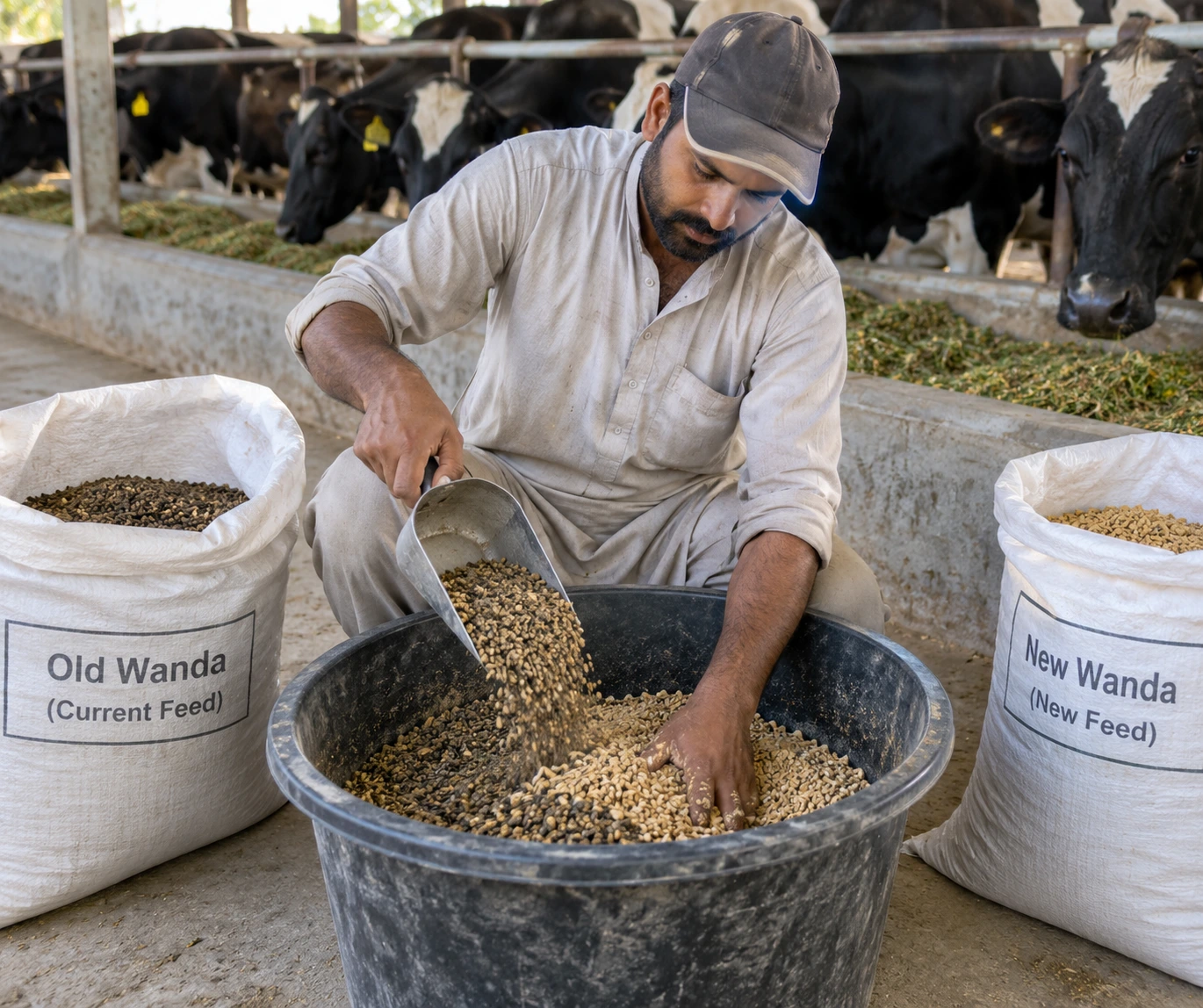
If your animals do well on mamni wanda, there is no reason to switch. Whatever you choose, make any change slowly over seven to ten days. Our guide on switching to a new wanda shows how.
What we have seen on our own farm: in our trials, cows did better when their daily wanda was shared between mamni wanda and a pellet, rather than either one alone. Mamni brings energy from grain, and the pellet adds protein, so together they covered more of what a milking cow needs. Buffaloes, on the other hand, did best on mamni wanda. If you try the mix, split the same daily amount between the two, do not give both in full, and make the change over seven to ten days. This is our farm experience, not a lab result, and every herd is different, so watch your own animals.
How to check mamni wanda quality with your own hands
You do not need a laboratory to catch a bad bag. Use your eyes, nose and hands:
- Smell: a good mash smells fresh and a little sweet. A sour, musty or burnt smell is a warning.
- Look: open a handful. You should see a real mix of pieces, not mostly bran, husk or powder.
- Moisture and mould: press a handful. It should be dry and loose. Lumps, warmth inside the bag, or green, grey or black patches mean moisture and mould. Do not feed a mouldy bag.
- Fine powder: a little fine powder is normal. If much of the bag is powder, the mix is weak.
- The bag: a proper bag carries the company's name and address, the protein level and the weight. Loose feed with no name gives you no one to answer for it.
- The animal: judge over two to three weeks, not one day. Appetite, dung, body condition and milk tell you more than any sales talk.
How much mamni wanda should I give?
There is no single number that fits every animal. The right amount depends on how much milk the animal gives, how good your fodder is, and the animal's size and condition. An animal on good green fodder needs less wanda than one on straw alone.
Our feed calculator gives a starting amount for your animal. Then watch the animal and adjust slowly. Our guide to the best wanda for milk in Pakistan explains how to match wanda to yield.
How to feed mamni wanda the right way
- Split it. Give it in two or more meals, usually at milking times, not all at once.
- Always with fodder. Wanda without enough fodder upsets the stomach and can drop milk fat.
- Clean water, always. An animal that cannot drink freely will not eat or milk properly.
- Clean trough. Throw out old, wet leftovers before adding new feed.
- Change slowly. Any new wanda, or a bigger amount, over seven to ten days.
Should I soak mamni wanda?
Many farmers wet or soak mamni wanda, and that is fine if it is done just before feeding. The problem is soaking it overnight or leaving wet feed in the trough, especially in summer. Wet feed sours and grows mould quickly in the heat, and a sour trough puts animals off their feed.
Do not "top up" a balanced wanda
It is common to add extra khal, binola or grain on top of a ready-made wanda. A well-made wanda is already balanced, and piling more of one ingredient on top changes that balance. Too much grain in particular can upset the stomach. If you feel your animals need more, ask us before adding anything.
Why does mamni wanda price keep changing?
The price of mamni wanda follows the price of what goes into it: maize, wheat, khal and the rest. When those move, the rate moves.
Do not compare only the price per bag. A cheap bag full of fillers can cost you more in lost milk and a weaker animal than a better bag costs at the counter. Compare what the animal gives back.
Fouji Mamni Wanda range
Fouji makes three traditional desi mamni wandas, each for a different kind of animal:
- Fouji A+ Wanda: 15 to 17 percent protein, a dependable everyday wanda that animals eat readily, for average milking animals and general care.
- Fouji Karachi Wanda: 16 to 18 percent protein, made with traditional Karachi mamni, especially for buffaloes, and cows eat it well too.
- Fouji Special Wanda: 17 to 19 percent protein, our premium mamni wanda for high-yielding cows and buffaloes, rich in minerals, vitamins and calcium.
We prepare our wanda clean, protecting it from soil and dirt. We do not put rice husk, sawdust, industrial waste, poultry waste, meat and bone meal, slaughterhouse waste or hormones in it.
Frequently asked questions
What is mamni wanda?
It is a traditional desi wanda sold as a loose, crushed mash instead of pellets. It is fed with green fodder and straw to give milking animals extra energy, protein and minerals.
Is mamni wanda better than pellet feed?
Both can be good. What matters is what is inside and how fresh it is. Animals eat mamni readily and finish it, and when green fodder is short it clings to toori so they eat the dry fodder better. Pellets carry the same mix in every bite and store easily.
Can I mix mamni wanda and pellets?
Yes. In our trials cows did better on a mix than on either alone, while buffaloes did best on mamni. Split the same daily amount between the two rather than giving both in full, and change over seven to ten days.
Can I give mamni wanda to both cows and buffaloes?
Yes. Choose the one that fits the animal and its milk. Karachi Wanda is made especially for buffaloes, and Special Wanda suits high-yielding cows and buffaloes.
Can I soak mamni wanda before feeding?
Yes, if you wet it just before feeding. Do not leave it soaking overnight or sitting wet in the trough, especially in summer, because it sours and grows mould.
How much mamni wanda should I give per day?
It depends on the animal's milk, its fodder and its size. Use our feed calculator for a starting amount, then adjust slowly while watching the animal.
Does mamni wanda increase milk?
Good wanda gives the animal the energy and protein that fodder alone cannot, so it helps the animal milk closer to its natural ability. Milk also depends on breed, fodder, water, heat and health, so no feed can promise a fixed increase.
What is the price of mamni wanda in Pakistan?
Rates change with grain and khal prices, so we do not publish a fixed price. Message us on WhatsApp or call for today's rate and delivery to your area.
When to call the vet
Feed is not the answer to everything. If an animal stops eating, its milk drops suddenly, it has diarrhoea, a swollen left side, a fever or seems dull, call a veterinarian first. Changing the wanda will not fix an illness, and it can hide what is really wrong.
Tell us about your animals and your fodder and we will help you choose the right Fouji Mamni Wanda.
This article offers general guidance for farm management and is not a substitute for advice from a qualified veterinarian or animal nutritionist. Every animal and every farm situation is different.