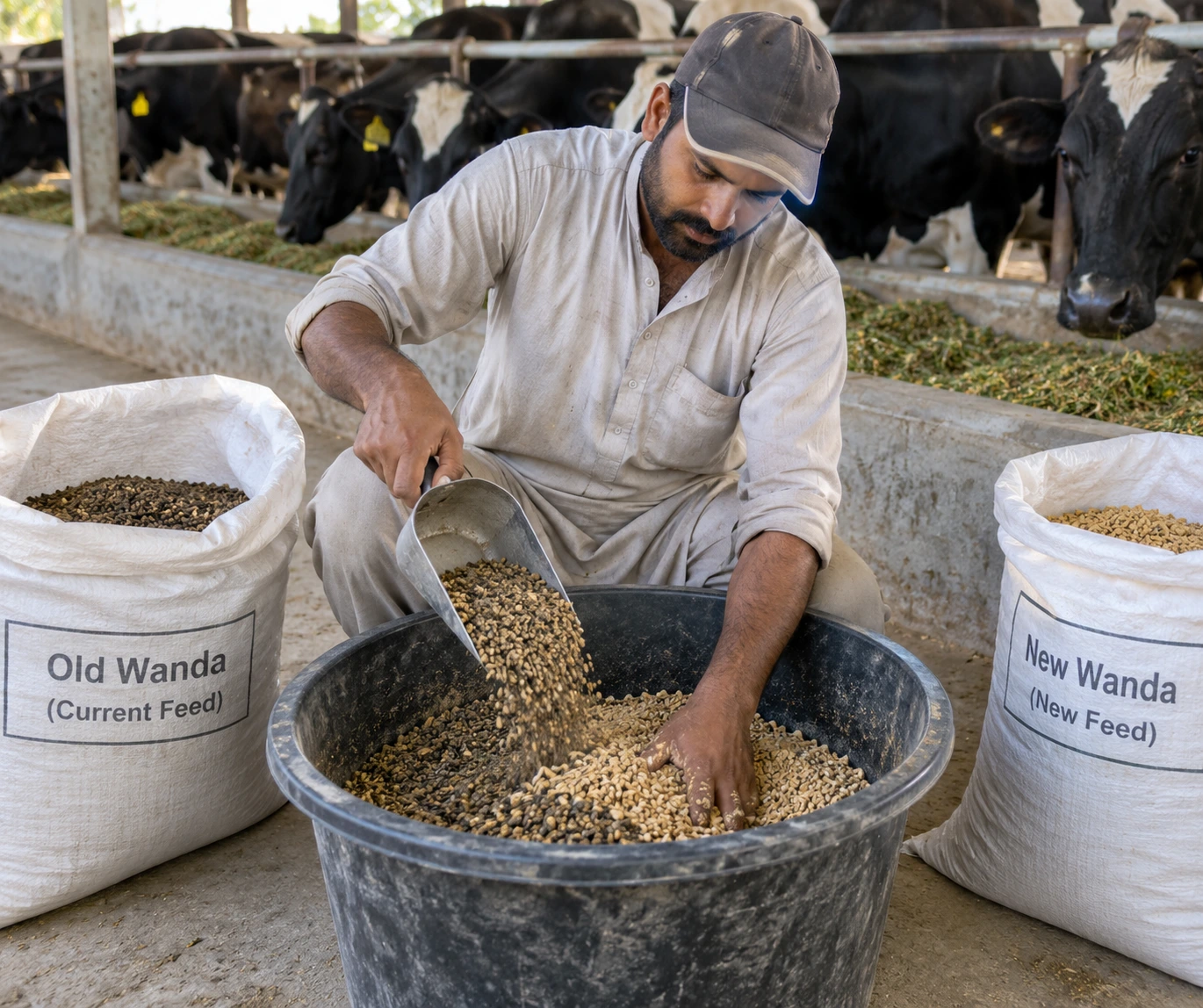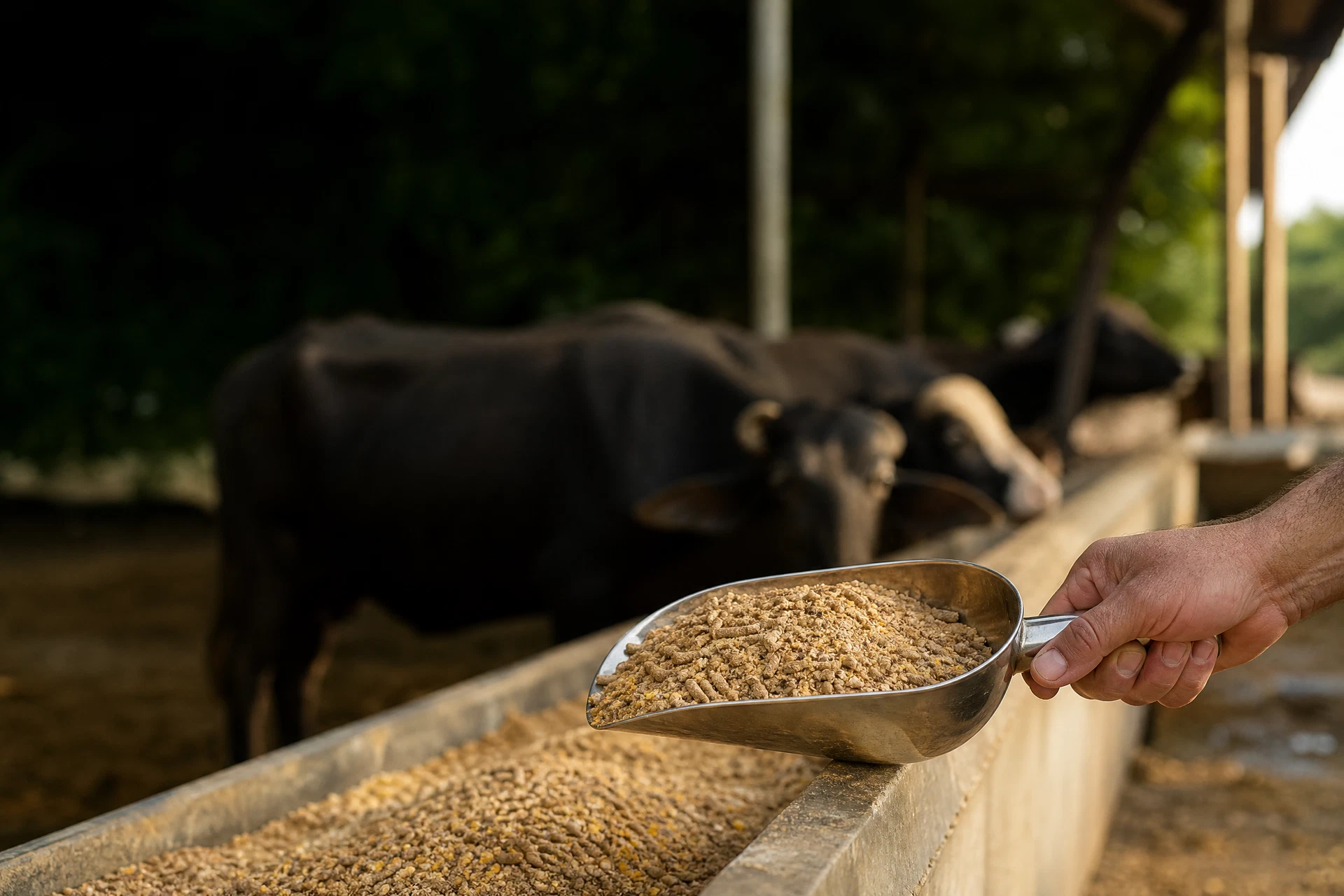
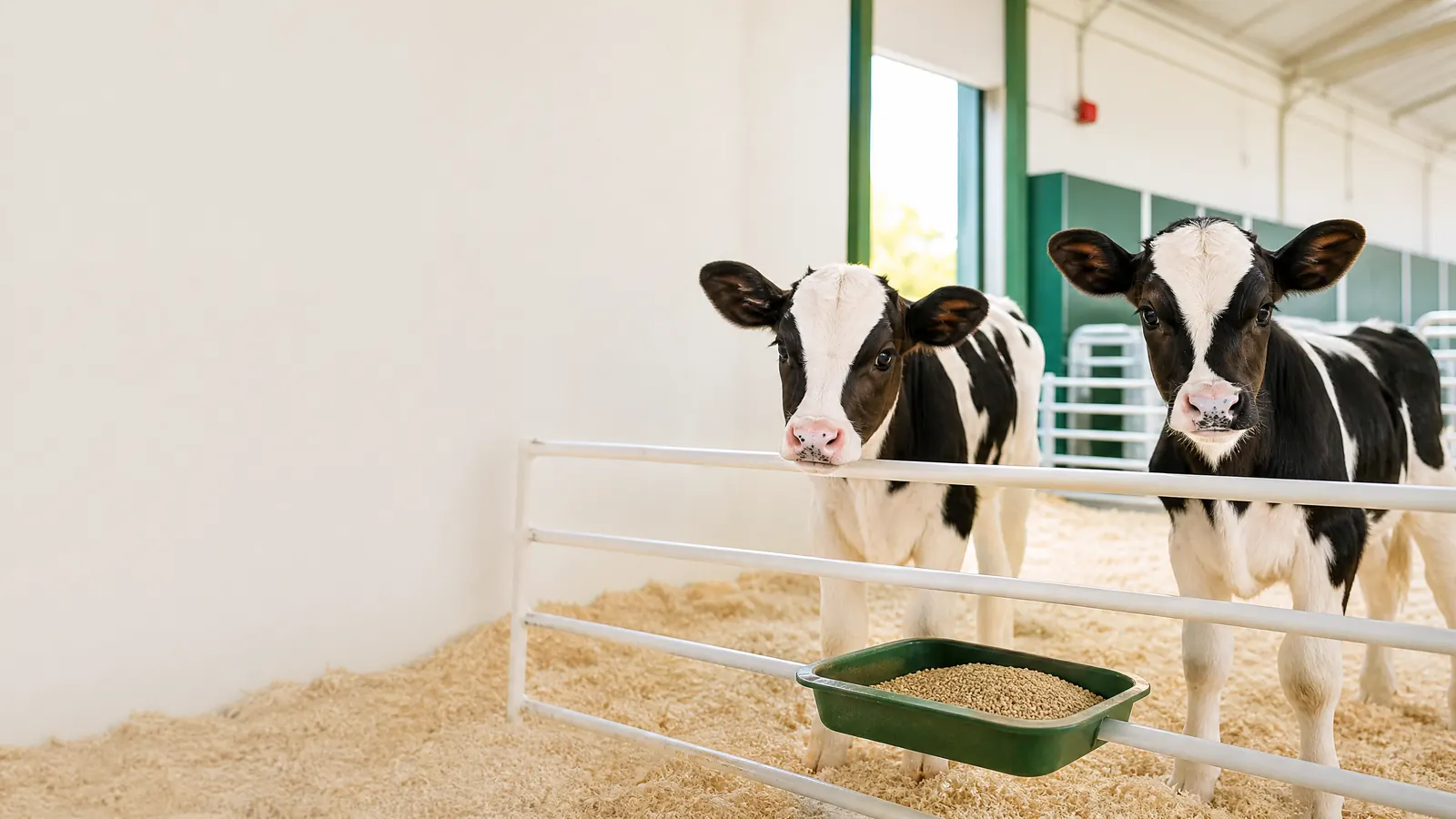
A newborn calf is not a small cow. It cannot digest grain or fodder yet, because its rumen, the big first stomach that does the work in an adult animal, is barely working. Calf starter is the feed that changes that. Get the first two months right and you raise a heifer or a bull that grows steadily. Get them wrong and you get the calf everyone has seen: it did well for a few weeks, then stopped.
This guide covers cow calves and buffalo calves (kattay) alike. The rules are the same.
What is calf starter?
Calf starter is a dry feed made for young calves, given alongside milk from the first week of life. It is richer and easier to digest than the wanda you give adult animals, and it usually comes as small pellets or a coarse mix so a calf can pick it up easily.
It is not a milk replacer. A milk replacer is a powder you mix with water and feed instead of milk. Calf starter is solid feed that the calf eats from a bucket while it is still drinking milk. The two do different jobs.
Why calf starter matters: the rumen is built by what the calf eats
Milk goes past the rumen, straight to the true stomach. It feeds the calf, but it does not build a rumen.
What builds a rumen is dry feed being fermented inside it. That fermentation makes acids that thicken the rumen wall and grow the small finger-like papillae that absorb nutrients for the rest of the animal's life. Starter is by far the best feed for this. Straw and fodder alone do very little for it at this age.
So a calf taken off milk without a working rumen has nothing to digest with, and it stalls, sometimes for weeks.
First things first: colostrum
Before any starter, a calf needs its mother's first milk, colostrum (bohli), in the first hours after birth. It carries the protection the calf needs against disease. A calf that misses it starts life weak, and no feed makes up for that later.
When should a calf start eating calf starter?
Put a small handful of fresh starter in front of the calf from around the third or fourth day. It will hardly touch it at first, and that is normal. You are building a habit and giving the rumen its first work.
Freshness matters more than quantity. Offer a little, throw out what is left the next day, and refill. Stale, damp or dusty starter teaches a calf to avoid the bucket, and you will spend weeks undoing that.
How much calf starter, week by week
Do not expect a straight line. Intake stays very low for the first two to three weeks and then climbs quickly. That climb is what you are waiting for.
- Weeks 1–2: a handful a day, often less. Some calves only lick at it. This is not a reason to stop offering it.
- Weeks 3–4: intake starts to move. This is when the rumen wall grows fastest, so fresh starter must be in front of the calf every single day.
- Week 5 onwards: intake should rise steadily towards the amount that lets the calf live without milk.
Research on rumen development points the same way: the calf needs steady daily intake over several weeks, not one good day.
More milk means less starter
This surprises many farmers, and it is one of the most useful things to understand.
A calf full of milk does not feel hungry enough to work at a bucket of dry feed. The more milk it gets, the later it starts eating starter properly. That is not a fault in the calf or in the feed.
It does not mean you should starve a calf of milk. A young calf needs milk, and cutting it short harms growth and health. It means starter intake will not rise on its own while milk stays at full volume, so milk has to come down in steps before weaning.
Water from the first week
Clean water should be in front of the calf from the first week of life. Not after weaning, and not at three weeks.
Rumen microbes need water to work, and a calf without free water eats far less starter and grows more slowly. If you fix only one thing in your calf shed, fix the water: a separate bucket, cleaned and refilled daily, low enough for a small calf to reach.
Milk does not count as water. It goes to a different part of the stomach.
Buffalo calves (kattay) need the same care
Buffalo calves follow exactly the same rules, but in many villages they get less attention than cow calves, and that is where losses happen. Watch for these common mistakes:
- The katta is tied away from water all day because "it drinks milk".
- Most of the milk is sold and the katta gets whatever is left, with no starter to make up the difference.
- The katta is moved straight onto adult wanda and straw, which its young stomach cannot use well.
A katta that gets colostrum, clean water, some milk and fresh starter from the first week grows into a stronger buffalo. Starter is also what lets you reduce milk safely, because the rumen is ready to take over.
When is a calf ready to be weaned?
The most useful rule in calf rearing is this: do not wean because the calf is a certain number of weeks old. Wean because it is eating enough starter to live on.
The common guidance is to wait until the calf eats about 1 kg of starter a day for three days in a row, and is healthy. Most calves reach this somewhere around six to eight weeks, but the intake decides, not the calendar. Fouji Calf Starter, at 20 to 22 percent protein, is made for exactly this stage.
Three days in a row matters. One good day is not a trend.
Take the milk away slowly
Stopping milk overnight is a shock, and the calf loses condition exactly when it should be growing.
Step the milk down over about two weeks: less milk at each feed, or one feed a day instead of two. As milk goes down, starter goes up, which is the whole point.
After weaning, leave everything else alone for about two weeks. Do not also move the calf to a new pen, mix it into a new group, change its feed or change its water. Weaning is already one stress. Stacking three more on top is how calves get sick.
What about fodder and straw?
Before weaning, the calf's stomach space is precious. Bulky straw or poor fodder fills it without giving much energy, and it pushes starter aside. A little good, soft fodder is fine once the calf is eating starter well. Keep it a side dish, not the main meal, until the calf is weaned and growing.
Can I make calf starter at home?
You can mix grain and khal at home, but getting it right for a young calf is harder than it looks. A calf needs a feed that is rich in protein, easy to digest, fresh, free from mould and dust, and with the right minerals. A home mix that is short on any of these slows the calf down at the age when growth matters most. If you do mix your own, keep it very fresh and ask someone who knows calf nutrition to check it.
Why is my calf not eating its starter?
Before blaming the feed, work through this list. It is almost always one of these:
- The starter is stale, damp or dusty. Give small, fresh amounts and replace them daily.
- There is no clean water, or the calf cannot reach the bucket.
- The calf gets so much milk that it is never hungry.
- The bucket is dirty, or sits where the calf does not naturally stand.
- The calf is unwell. A calf that suddenly stops eating is a health question, not a feed question.
What to check every day
- Is the calf coming to the starter bucket, or ignoring it?
- Is the starter clean and dry, or damp and stale?
- Can it reach the water, and is the water clean?
- Is the dung firm? Loose dung in a young calf needs attention the same day.
- Is the calf bright and standing with the others, or hanging back?
Frequently asked questions
At what age should I start calf starter?
From around the third or fourth day of life, as a small fresh handful. The calf will eat very little for the first two weeks, and that is normal.
How much calf starter should a calf eat per day?
It changes with age. Very little in the first two weeks, rising quickly from week three. Before weaning, the calf should be eating about 1 kg a day for three days in a row.
Can I give calf starter to a buffalo calf (katta)?
Yes. Buffalo calves need the same things as cow calves: colostrum, clean water, milk and fresh starter from the first week.
What is the difference between calf starter and milk replacer?
Milk replacer is a powder mixed with water and fed instead of milk. Calf starter is a dry feed the calf eats from a bucket while it is still on milk, and it is what builds the rumen.
Can I give adult wanda to a young calf instead of starter?
It is not a good substitute. Adult wanda is made for a working rumen and a different stage of life. A young calf does better on a starter made for it.
Can goat kids and lambs eat calf starter?
It is better to use a feed made for sheep and goats. Sheep in particular are sensitive to copper, and calf feeds are not formulated with that in mind. Fouji Goat Max is made for them.
What is the price of calf starter in Pakistan?
Rates change with the price of grain and khal, so we do not publish a fixed price. Message us on WhatsApp or call for today's rate and delivery to your area.
When to call the vet
Scours, a calf that will not drink, a dull or droopy calf, fast breathing or coughing, or a calf that stops eating starter for more than a day: these need a veterinarian promptly, not a change of feed. Young calves go downhill fast, and dehydration kills faster than almost anything else in a calf shed.
Fouji Calf Starter is a 20 to 22 percent protein pellet in a 20 kg bag. For planning the rest of the herd's feed, see what wanda is and how much to feed. Tell us your calf's age and what it is being fed and we will help you set a routine that fits your farm.
This article offers general guidance for farm management and is not a substitute for advice from a qualified veterinarian or animal nutritionist. Every animal and every farm situation is different.