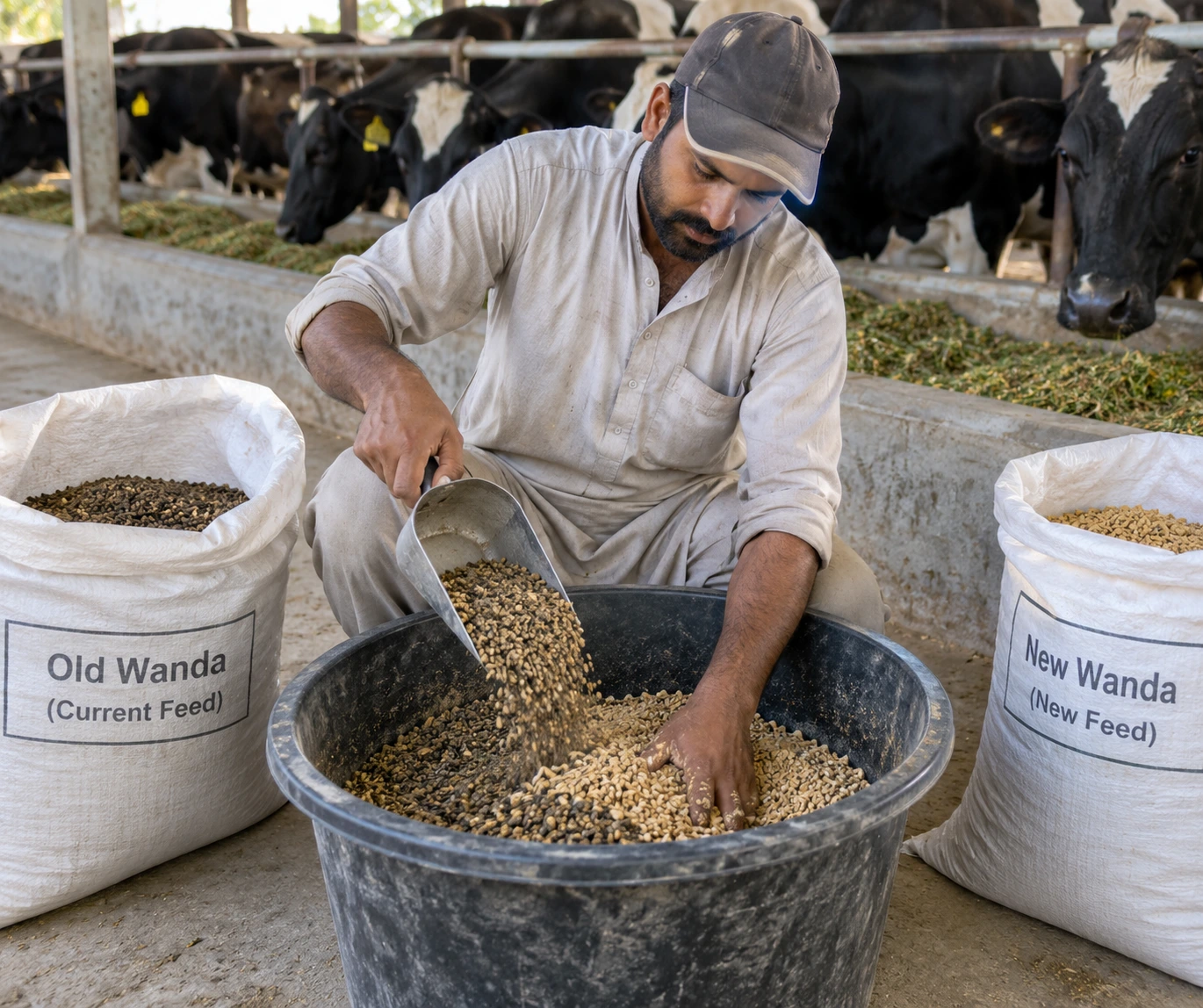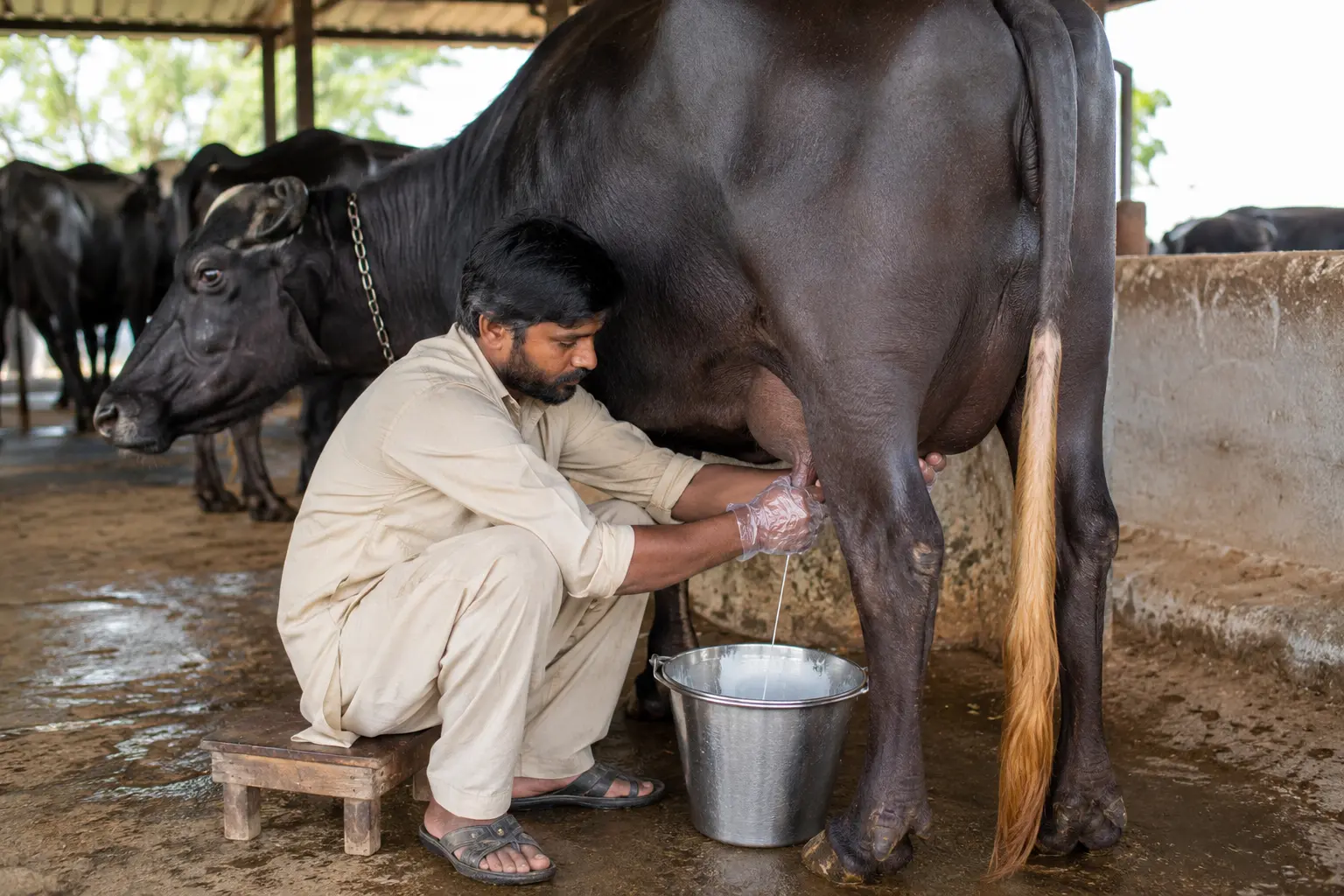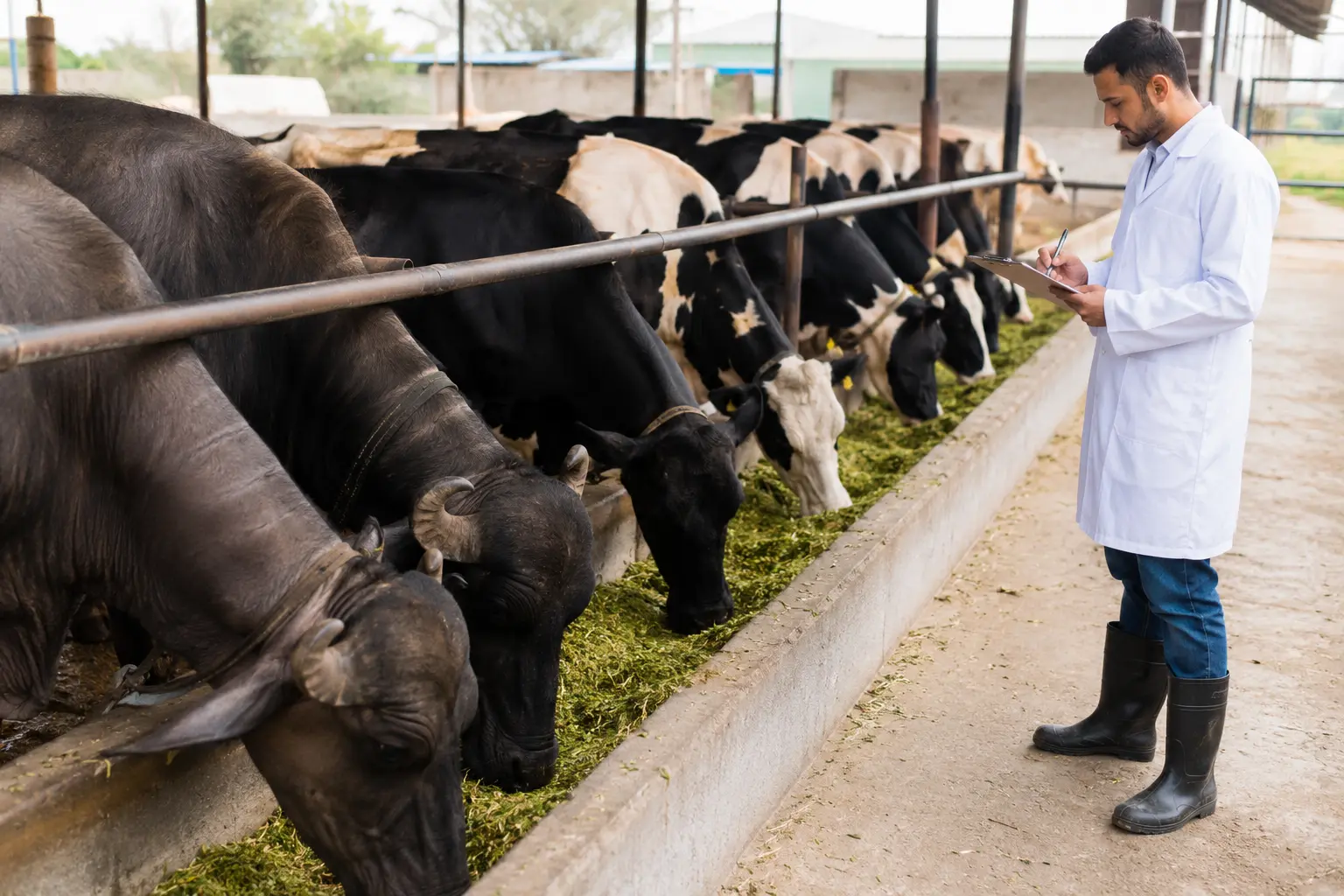
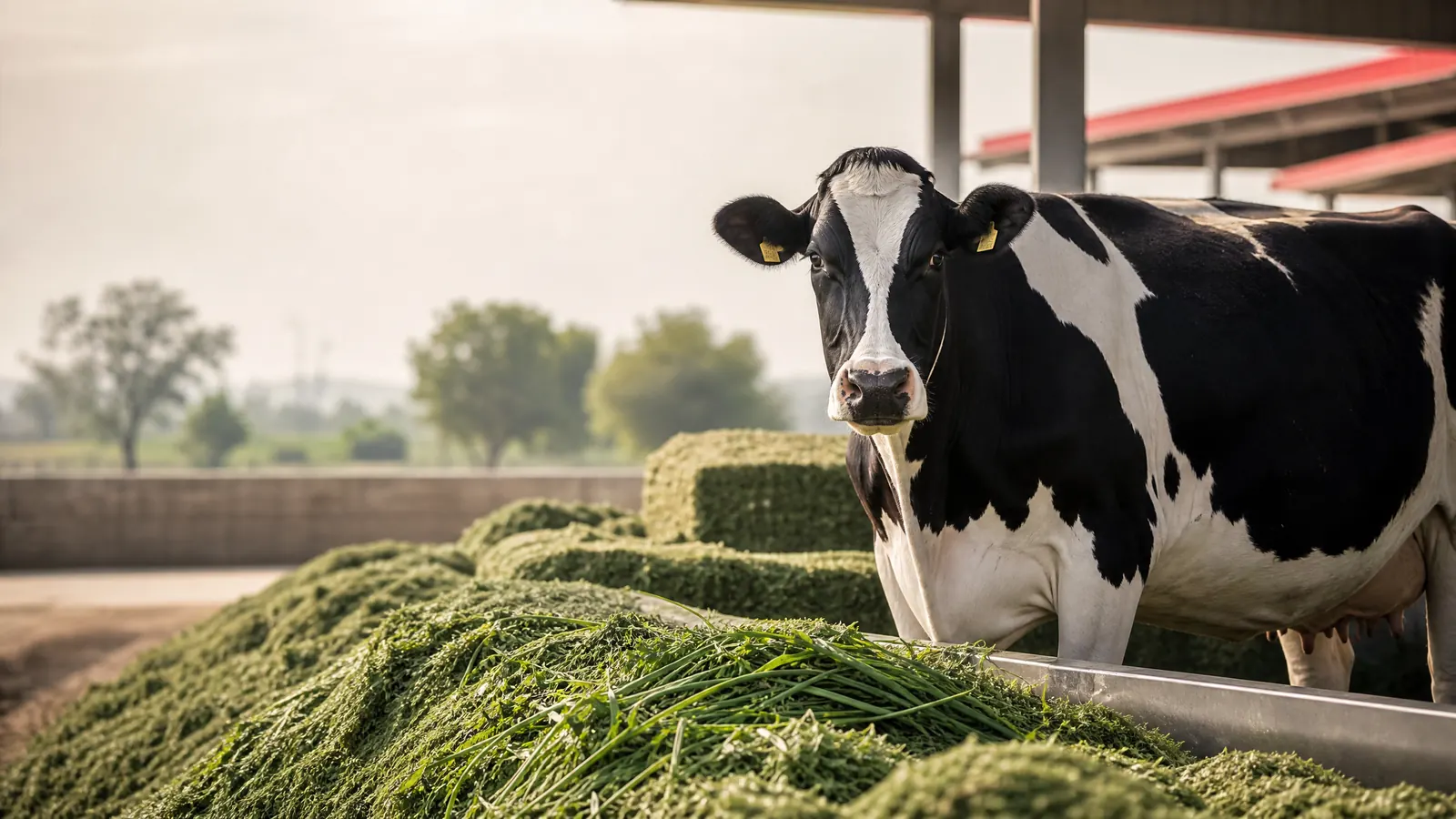
A useful dairy feeding conversation does not begin with a bag of feed. It begins with the herd group, the forage already available, water access, daily routine and the production stage of the animals. That context helps turn a product discussion into a more practical feeding plan.
Start by separating animals into sensible groups where possible. Fresh cows, growing heifers and later-lactation animals do not have identical needs. A simple group-by-group note of body condition, milk trend, appetite and the forage being offered gives the farm team a stronger starting point than a single universal quantity for every animal.
Forage quality and availability should remain visible in the conversation. Observe the silage, hay or green fodder being offered, how consistently it is available and whether animals are sorting or leaving it behind. If a forage analysis is available, bring it to the discussion with a qualified nutritionist. A feed product is most useful when it complements the whole ration rather than being expected to correct every issue alone.
Make changes steadily and observe the response. Record what changed, when it changed and what you noticed in intake, manure, milk trend and animal comfort. Sudden ration changes, unexplained drops in intake or production, illness, pregnancy concerns or major forage changes need a farm-specific review from a qualified livestock nutritionist or veterinarian.